“The people are the root of the nation. When the root withers, the nation falls.”
— Sentiment echoed by Tonghak leaders during the 1894 uprising
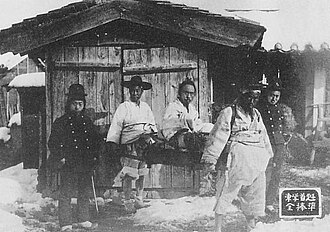
In the spring of 1894, tens of thousands of Korean peasants took up arms against a government they believed had abandoned them. What began as a local protest in the southwestern province of Jeolla grew into one of the most consequential mass uprisings in Korean history — an event that not only shook the foundations of the Joseon dynasty but also triggered a chain of international crises that would reshape East Asia for decades to come. The Tonghak Peasant Revolution (동학농민혁명) was simultaneously a cry for social justice, a rejection of foreign exploitation, and a desperate assertion of Korean identity at a moment when the peninsula stood at the crossroads of empire.
Quick Facts: The Tonghak Peasant Revolution
| Fact | Detail |
|---|---|
| Date | 1894 (Gabo Year) |
| Location | Joseon Korea, primarily Jeolla Province |
| Main Movement | Tonghak (Eastern Learning) religious and peasant movement |
| Key Leader | Jeon Bong-jun (전봉준), known as “Green Bean General” |
| Opposing Forces | Joseon government army, Japanese Imperial forces |
| Immediate Trigger | Corruption of local magistrate Jo Byong-gap in Gobu County |
| International Impact | Directly triggered the First Sino-Japanese War (1894–1895) |
| Outcome | Suppression of the uprising; Jeon Bong-jun executed in 1895 |
What Was the Tonghak Movement?
To understand the revolution, one must first understand the religious and ideological movement that gave it its name. Tonghak — literally meaning “Eastern Learning” — was founded in 1860 by Choe Je-u (최제우), a scholar from the Gyeongsang region who sought to counter the influence of Western religion (“Sohak,” or Western Learning, meaning Catholicism) with a distinctly Korean spiritual vision. Tonghak synthesized elements of Confucianism, Buddhism, and Daoism, while emphasizing the divine worth of every human being — a radical concept in rigid Joseon society.
The movement spread rapidly among the rural poor, offering not only spiritual solace but a language of protest against the entrenched social hierarchy. Choe Je-u was executed by the government in 1864, accused of spreading dangerous heterodox ideas. His martyrdom only deepened devotion among followers. By the 1890s, the Tonghak movement had hundreds of thousands of adherents across the Korean peninsula, organized into local community cells called po. Under the second leader, Choe Si-hyeong (최시형), the movement maintained a quieter profile while its membership continued to swell with landless farmers and impoverished commoners.
Why Did the Revolution Happen in 1894?
The Tonghak Peasant Revolution did not emerge from nowhere. It was the result of decades of compounding grievances that had made life in rural Joseon nearly unbearable for ordinary people.
1. Systemic Government Corruption
The Joseon dynasty in its final decades was plagued by rampant corruption at every level of administration. Local magistrates, known as suryeong, routinely extorted taxes far beyond what was legally required, pocketing the surplus while peasants starved. The tax collection system had become a mechanism of predation rather than governance. In Gobu County in North Jeolla Province, the magistrate Jo Byong-gap became a symbol of this abuse — illegally constructing an irrigation reservoir and then charging farmers exorbitant fees for water access.
2. Economic Distress and Land Exploitation
The opening of Korean ports following the 1876 Ganghwa Treaty had introduced foreign merchants — particularly Japanese traders — into the Korean market. Japanese grain buyers depressed local food prices while purchasing rice in bulk for export, leaving Korean farmers unable to feed their own families. The export of rice through the port of Gunsan transformed Jeolla Province’s agricultural wealth into foreign profit while local communities suffered food shortages.
3. Social Resentment
Joseon’s rigid class system — with its hereditary aristocracy (the yangban) sitting above commoners and the despised lower classes — had long generated resentment. The Tonghak movement offered a counter-narrative: that all people possessed an innate dignity and that the current social order was a violation of heaven’s will. This message resonated powerfully among peasants who saw yangban officials profiting from their misery.
“Drive out the Japanese dwarves and the Western barbarians, and uphold righteousness throughout the land.”
— Tonghak peasant army rallying cry, 1894
The Uprising Begins: From Gobu to Jeonju
In January 1894, Jeon Bong-jun — a local Tonghak leader of short stature who earned the nickname “Nokdu Janggun” (녹두장군, “Green Bean General”) — led an initial protest in Gobu County, seizing the magistrate’s office and distributing grain from government storehouses to the hungry populace. The government’s response was predictably heavy-handed: rather than addressing the underlying grievances, royal investigators arrived to punish those who had participated in the protest, further inflaming local anger.
By May 1894, Jeon Bong-jun had reorganized and launched a full-scale military campaign. The peasant forces, armed with bamboo spears, farm tools, and a handful of firearms, demonstrated remarkable military effectiveness. At the Battle of Hwangto Pass (황토현 전투) on May 11, 1894, the Tonghak army decisively defeated a government force — a stunning reversal that sent shockwaves through the Joseon court in Seoul. The rebels continued their advance northward, and by late May they had captured Jeonju, the administrative capital of Jeolla Province and a city of enormous symbolic importance as the ancestral hometown of the Joseon royal family.
The Jeonju Agreement and Foreign Intervention
The capture of Jeonju forced the government to negotiate. In June 1894, the Joseon court and the Tonghak leadership reached the Jeonju Agreement, which promised reforms including the abolition of discriminatory social practices, reduction of peasant tax burdens, and punishment of corrupt officials. In exchange, the Tonghak forces agreed to withdraw from the city and establish a network of local governance committees called jipgang to oversee the reforms.
Had the story ended there, the Tonghak Revolution might be remembered as a qualified success. But events beyond Korea’s borders intervened catastrophically. Desperate to suppress the initial uprising, the Joseon court had requested military assistance from China under the terms of the 1885 Tianjin Convention. China sent troops. Japan, citing the same treaty’s requirement that both powers notify each other of troop deployments, dispatched its own forces — far more than necessary to address the situation. When the Jeonju Agreement removed the immediate pretext for foreign military presence, neither Japan nor China showed any intention of withdrawing.
Japan used the moment to force a confrontation with China over influence on the Korean peninsula. In July 1894, Japanese troops seized the Gyeongbokgung palace in Seoul and installed a pro-Japanese reformist government. By August, Japan and China were formally at war — the First Sino-Japanese War. Korea became a theater of operations for two imperial powers, and the ordinary Koreans who had started the revolution found themselves spectators to a conflict that would determine their nation’s fate.
The Second Rising and Final Defeat
Watching Japanese troops march through their homeland, Jeon Bong-jun and other Tonghak leaders understood that the reform agenda was now inseparable from the question of national sovereignty. In October 1894, the Tonghak forces launched a second, explicitly anti-Japanese uprising. Jeon called for a combined force from both the northern and southern Tonghak branches to march on Seoul and expel the foreign occupiers.
This second phase proved far more costly. The peasant army — still primarily armed with traditional weapons — faced not only Joseon government troops but also well-trained and well-equipped Japanese Imperial soldiers who were simultaneously conducting a modern war against China. At the Battle of Ugeumchi (우금치 전투) in November 1894, fought near present-day Gongju in South Chungcheong Province, the Tonghak forces suffered a catastrophic defeat. Repeated charges against entrenched positions defended by Japanese repeating rifles and Joseon artillery left thousands of peasant soldiers dead. The battle effectively broke the military power of the Tonghak uprising.
Jeon Bong-jun fled southward but was captured in December 1894. He was brought to Seoul, interrogated, and executed in March 1895. The government carried out widespread reprisals across the countryside. Estimates of total deaths from the revolution and its suppression range widely, but scholars agree that the human cost — including executions, battle deaths, and disease — numbered in the tens of thousands.
Comparison: Tonghak Demands vs. Gabo Reform Outcomes
| Tonghak Demands (1894) | Gabo Reform Outcomes (1894–1895) |
|---|---|
| Abolish the hereditary class system | Legal abolition of the yangban–commoner distinction enacted |
| End corrupt local magistrate abuses | Administrative reforms introduced; enforcement remained weak |
| Stop Japanese economic exploitation | Japanese economic influence increased significantly |
| Allow Tonghak religious freedom | Tonghak officially suppressed; leader Choe Si-hyeong executed 1898 |
| Reform the military to defend against foreign forces | Military reform undertaken under Japanese guidance |
What Legacy Did the Tonghak Revolution Leave?
The defeat of the Tonghak armies did not erase the revolution’s significance — if anything, it amplified it across the following century. The uprising demonstrated, for the first time in Korean history, that commoners and peasants were capable of organized political and military action on a national scale. The movement’s demands — social equality, accountable governance, economic justice, and national sovereignty — would echo through every subsequent Korean reform movement, from the Independence Club of the 1890s to the March First Movement of 1919.
The Gabo Reforms (갑오개혁), which the pro-Japanese government enacted in 1894–1895 partly in response to Tonghak pressure, included several measures the peasant movement had long demanded: the legal abolition of the hereditary class system, reforms to the tax code, and the ending of certain discriminatory practices. Critics note, however, that these reforms were implemented by a government under Japanese supervision, undermining their legitimacy as genuine responses to Korean aspirations.
In modern South Korea, the revolution has been officially commemorated since 1994, when the centennial was marked with national ceremonies and the designation of key battle sites as protected heritage locations. The term used by the South Korean government — Donghak Peasant Revolution (동학농민혁명) — deliberately uses the word “revolution” rather than “rebellion,” signaling a rehabilitation of the participants as patriots rather than criminals. Jeon Bong-jun has been recognized as a national hero, his image appearing in school textbooks, films, and public monuments.
The sites associated with the uprising — including the battlefield at Hwangto Pass in Jeongup, North Jeolla Province — have been developed as heritage tourism destinations. The Donghak Peasant Revolution Memorial Hall in Jeongup preserves artifacts, documents, and exhibits that tell the story of the uprising for new generations of Koreans and international visitors.
Continue Exploring
Deepen your understanding of the Tonghak Peasant Revolution and its historical context with these resources:
- Tonghak Peasant Revolution — Wikipedia
- Encyclopedia of Korean Culture (AKS) — Donghak Movement
- Donghak Rebellion — Encyclopædia Britannica
- Visit Korea — Donghak Peasant Revolution Memorial Hall, Jeongup
- Korea Heritage Service — Protected Sites of the 1894 Revolution
- Asia Society — Understanding 19th-Century Korean History