“The April Third Incident left wounds so deep they went unspoken for decades — a silence finally broken only at the dawn of a new century.”
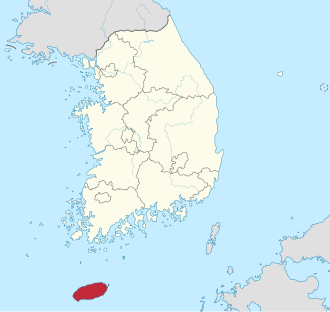
On the morning of April 3, 1948, armed members of the South Korean Workers’ Party launched coordinated attacks on police stations across Jeju Island. What followed was one of the most devastating and long-suppressed episodes in modern Korean history — a conflict that would consume the island for years, claim tens of thousands of lives, and remain largely unacknowledged in South Korea for more than half a century. Known in Korean as 4·3 Sageon (the April Third Incident), the Jeju Uprising stands as a defining, if painful, chapter in the story of how Korea became the divided nation it is today.
Quick Facts: The Jeju Uprising at a Glance
| Detail | Information |
|---|---|
| Korean Name | 제주 4·3 사건 (Jeju 4·3 Incident) |
| Start Date | April 3, 1948 |
| Location | Jeju Island, South Korea |
| Estimated Deaths | 14,000–30,000 civilians |
| Context | U.S. military occupation of South Korea; Cold War tensions |
| Primary Instigators | South Korean Workers’ Party (left-wing insurgents) |
| Suppression Forces | South Korean constabulary, police, and right-wing youth groups |
| Official Recognition | 2003 — President Roh Moo-hyun issued a formal government apology |
What Led to the April Third Uprising on Jeju Island?
To understand the Jeju Uprising, one must appreciate the turbulent world into which it was born. Following Japan’s defeat in World War II in 1945, the Korean peninsula was divided along the 38th parallel. The Soviet Union occupied the north, while the United States administered the south under the United States Army Military Government in Korea (USAMGIK). For Koreans, liberation from Japanese colonial rule had been a long-awaited dream — but the reality of occupation by foreign powers, combined with growing ideological polarization, quickly turned hope into frustration.
Jeju Island, situated off the southern tip of the Korean peninsula, had its own particular history of resistance. During the Japanese colonial period, many islanders had developed left-leaning political sympathies. After liberation, the South Korean Workers’ Party — a communist-aligned organization — established a significant presence on the island. Tensions between leftist islanders and the U.S.-backed constabulary and right-wing youth groups mounted steadily through 1946 and 1947.
A pivotal moment came on March 1, 1947, when police opened fire on a crowd of demonstrators marking the anniversary of the 1919 March First Movement, killing six people. A general strike swept Jeju in response. The authorities cracked down hard, arresting hundreds of suspected leftists. Torture and abuses in detention further inflamed the population. By early 1948, with a U.S.-sponsored separate election for southern Korea looming — an election that many Koreans feared would cement the division of the peninsula — conditions on Jeju had become a powder keg.
The Outbreak: April 3, 1948
In the early hours of April 3, 1948, approximately 350 armed members of the South Korean Workers’ Party launched simultaneous attacks on 12 of Jeju’s 24 police stations, as well as on the homes and offices of right-wing youth group leaders. The insurgents’ stated aim was to resist the May 10 separate elections and oppose the establishment of a separate southern government, which they viewed as a betrayal of Korean unification.
The initial uprising was relatively small in scale. But the response from the authorities would transform a limited insurgency into an island-wide catastrophe. The South Korean constabulary, police, and right-wing youth groups — notably the Northwest Youth Association, composed largely of northern Korean refugees with fierce anti-communist convictions — launched sweeping counter-insurgency operations. Villages suspected of harboring or sympathizing with insurgents were burned. Civilians were subjected to mass arrests, torture, and executions.
“Entire villages were razed. Men, women, and children were killed on suspicion alone. The island’s population was devastated not merely by combat, but by a systematic campaign of terror directed at ordinary people.”
The May 10, 1948 elections — held across South Korea to establish the First Republic — were effectively boycotted or disrupted on Jeju. Of the 200 electoral districts nationwide, the two on Jeju were the only ones that failed to produce valid results, a telling testament to the island’s resistance and the chaos engulfing it.
5 Key Phases of the Jeju Uprising
1. The Triggering Strike and Crackdown (March 1947 – April 1948)
The March 1, 1947 shooting by police, followed by mass arrests during the general strike, created the immediate conditions for armed revolt. Hundreds of islanders were detained and mistreated, radicalizing many who might otherwise have remained passive.
2. The Initial Insurgency (April – May 1948)
The April 3 attacks on police stations marked the open outbreak of conflict. Insurgents retreated into the mountainous interior of Jeju — centered on Hallasan, the island’s volcanic peak — while authorities struggled to contain the rebellion before the scheduled May elections.
3. Negotiations and Collapse (May – October 1948)
There were brief attempts at negotiation between military commanders and insurgent leaders. A tentative ceasefire was reached in May 1948, but it broke down when a constabulary unit mutinied rather than participate in what its members saw as an unjust suppression. The collapse of negotiations reopened full-scale conflict.
4. The Scorched-Earth Campaign (November 1948 – 1949)
The bloodiest phase began in November 1948, following the establishment of the Republic of Korea under President Syngman Rhee. Martial law was declared on Jeju, and military commanders issued orders to treat anyone found in the mountainous inland areas as an enemy. Entire coastal and inland villages were designated as hostile and destroyed. It is during this period that the vast majority of civilian deaths occurred. An estimated 70% of the island’s villages were burned to the ground.
5. Final Suppression and Lingering Conflict (1949–1954)
By mid-1949, organized resistance had been largely crushed. The last declared insurgents surrendered or were killed in the early 1950s, though sporadic activity continued even after the Korean War began in 1950. The formal end of the Jeju Incident is generally placed in September 1954, when restrictions on the mountain areas of Jeju were finally lifted.
The Human Cost: How Many People Died in the Jeju Uprising?
Precise figures remain difficult to establish due to decades of official suppression of information. Estimates of the death toll range widely, from approximately 14,000 to as many as 30,000 people — out of a pre-conflict island population of roughly 300,000. This means that somewhere between 5% and 10% of Jeju’s entire population may have perished. A significant additional number of islanders were imprisoned, tortured, or forced to flee.
The victims were predominantly civilians. While armed insurgents did carry out killings — particularly targeting police officers, government officials, and right-wing activists — the overwhelming majority of deaths resulted from counter-insurgency operations by state forces and affiliated right-wing groups. Entire families were executed on suspicion of having relatives involved in the uprising. The social fabric of Jeju was torn apart.
| Aspect | Insurgent Actions | State/Counter-Insurgency Actions |
|---|---|---|
| Primary Targets | Police stations, right-wing officials | Villages, suspected sympathizers |
| Methods | Armed attacks, assassinations | Mass arrests, executions, village burnings |
| Scale of Violence | Limited; hundreds of victims | Massive; majority of overall deaths |
| Documented Atrocities | Killings of police families | Massacres of entire village populations |
Decades of Silence: Why Was the Jeju Uprising Suppressed in Memory?
For decades after the events of 1948–1954, the Jeju Uprising was effectively a forbidden subject in South Korea. Under the authoritarian governments that ruled South Korea from the founding of the First Republic through the late 1980s, discussing the April Third Incident in sympathetic terms was dangerous. The official narrative cast the uprising purely as a communist rebellion that had been justifiably suppressed. Survivors and bereaved families were stigmatized, sometimes denied employment or subjected to surveillance. The children and grandchildren of those who died bore the social weight of being labeled the descendants of rebels.
Only with South Korea’s democratization — accelerated by the pro-democracy movement of the 1980s and the formal transition to civilian government — did space begin to open for honest reckoning. Journalists, academics, and surviving witnesses gradually brought the full scope of the tragedy to public attention.
Recognition and Reconciliation
The turning point came in the early 2000s. In 2000, the South Korean National Assembly passed the Special Act on Finding the Truth about the Jeju April Third Incident and Honoring the Victims, establishing an official government investigation. In 2003, President Roh Moo-hyun issued a formal apology on behalf of the South Korean government — the first sitting president to do so — acknowledging that the state had committed grave human rights abuses against the people of Jeju.
A national memorial park, the Jeju 4·3 Peace Park, was established outside Jeju City. It serves as a site of remembrance, education, and reconciliation, drawing visitors from across Korea and abroad. April 3 is now commemorated annually as a day of national remembrance.
The process of reconciliation has not been without controversy. Debates continue about how to characterize the uprising — as a communist rebellion, a popular resistance movement, or a complex event driven by multiple forces — and victims’ groups have at times expressed frustration that rehabilitation and compensation have not gone far enough. Nevertheless, the official acknowledgment of state responsibility represents a significant step in South Korea’s ongoing engagement with its difficult past.
The Jeju Uprising in Historical Context
The Jeju Uprising did not occur in isolation. It was part of a broader wave of left-right violence that swept the southern half of the Korean peninsula in the late 1940s, as the ideological struggle between communism and capitalism — played out in microcosm on the divided peninsula — produced widespread instability. The Yeosu–Suncheon Rebellion of October 1948, in which a constabulary unit mutinied rather than be sent to suppress Jeju, further illustrated the depth of the political crisis facing the fledgling South Korean state.
Understanding the Jeju Uprising is essential to understanding the Korean War that followed. The extreme polarization, the cycles of violence and reprisal, and the brutal suppression of perceived leftist sympathizers on Jeju were not aberrations — they were symptoms of a society being torn apart by ideological conflict under the shadow of Cold War geopolitics.