“Pansori is not merely singing — it is the voice of an entire people, carrying joy, sorrow, and the full weight of human experience in a single performance.”
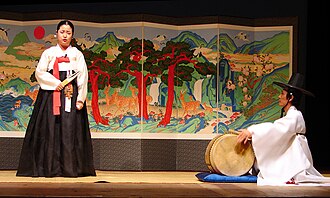
Few art forms in the world demand as much from a single performer as pansori. A lone singer, accompanied by only one drummer, can hold an audience captive for hours — sometimes an entire day — weaving an epic narrative through song, speech, and gesture. This is pansori: a uniquely Korean tradition of dramatic vocal storytelling that has endured for centuries and continues to move audiences around the world today.
Born from the creative energy of Korea’s common people during the Joseon dynasty, pansori evolved from shamanistic musical roots into one of Asia’s most celebrated performing arts. In 2003, UNESCO recognized it as a Masterpiece of the Oral and Intangible Heritage of Humanity — a testament to its extraordinary cultural depth and resilience.
Quick Facts: Pansori at a Glance
| Fact | Detail |
|---|---|
| Origin Period | 17th–18th century, Joseon dynasty |
| Korean Script | 판소리 |
| Performers | One singer (sorikkun) + one drummer (gosu) |
| Original Repertoire | Twelve pansori works (madang) |
| Surviving Works | Five complete works remain today |
| UNESCO Recognition | 2003 — Intangible Cultural Heritage of Humanity |
| Korean National Status | Important Intangible Cultural Property No. 5 |
| Performance Length | Hours to a full day for complete works |
What Is Pansori? Understanding the Art Form
The word pansori combines two Korean words: pan, meaning a place where many people gather, and sori, meaning sound or voice. Together, they describe the essential nature of this art — communal, public, and powerfully vocal.
A pansori performance involves a small but tightly bound partnership. The sorikkun, or singer, is the central figure — standing or moving about the performance space, shifting between sung passages (chang), spoken narrative (aniri), and dramatic gesture (ballim). Beside the singer sits the gosu, the drummer, who plays the hourglass-shaped buk drum. The drummer does far more than keep rhythm; through a practice called chuimsae, the drummer calls out words of encouragement and appreciation — short phrases like 얼씨구! (eolssigoo!) — that function almost like a living conversation with the singer, energizing the performance and connecting audience to artist.
Audience members themselves may also call out chuimsae, making pansori one of the most participatory classical art forms in the world. There are no elaborate sets, no orchestras, no costumes beyond the singer’s fan and handkerchief. Everything depends on the power and artistry of the human voice and the intensity of human presence.
Why Did Pansori Emerge from Korean Common Culture?
Pansori’s origins are deeply rooted in the social landscape of 17th-century Korea. Scholars believe the form developed from earlier shamanistic ritual music and folk song traditions of the southwestern Jeolla province region, an area long known for its rich musical culture. It was from this fertile ground that traveling performers, often of low social standing, began developing the extended narrative song cycles that would become pansori.
During the Joseon dynasty, Korean society was strictly stratified under the Confucian class system. Artists and entertainers — members of the chungin and cheonmin classes — occupied the lower rungs of social hierarchy. Yet it was precisely from these margins that pansori emerged, giving voice to stories that resonated across class boundaries: tales of filial devotion, thwarted love, social injustice, and comic triumph over adversity.
By the 18th and 19th centuries, pansori had transcended its origins among common people and captured the attention of the aristocratic yangban class. Wealthy patrons began sponsoring performers, and the art form underwent a period of refinement and codification. Twelve pansori works — called madang — are recorded as having existed during the tradition’s height. Of these, only five survive with complete musical notation and text today:
- Chunhyangga — the love story of Chunhyang and Yi Mongnyong, perhaps the most celebrated of all pansori works
- Simcheongga — the tale of a devoted daughter’s sacrifice for her blind father
- Heungbuga — the story of kind Heungbu and his greedy brother Nolbu
- Sugungga — a comic tale set in the underwater kingdom of the Dragon King
- Jeokbyeokga — a Korean retelling of the Chinese epic Battle of Red Cliffs
“To master pansori, a singer must train for decades — cultivating a voice that can express every shade of human emotion, from the heights of joy to the depths of grief, across hours of unbroken performance.”
The Voice That Must Break Before It Can Sing
Training to become a pansori master is among the most demanding journeys in any musical tradition. Aspiring singers traditionally underwent a practice called toeum or mountain training, retreating to remote locations — often near waterfalls — to practice for months or years, pushing the voice to its absolute limits.
The goal was not merely technical perfection but the achievement of a quality called 득음 (deugneum), literally meaning “attaining the sound.” This refers to a transformation of the voice through extreme training — a controlled roughness and gravelly resonance that gives mature pansori singing its distinctive emotional power. A pansori singer’s voice is deliberately unlike the polished, smooth tone prized in many Western classical traditions; it carries the texture of struggle, experience, and hard-won wisdom.
The pansori tradition has been transmitted through lineage-like teacher-student relationships, and several regional schools — called je — developed distinct stylistic identities. The western style (Seopyeonje) is known for its lyrical sadness and ornamentation, while the eastern style (Dongpyeonje) tends toward a more robust, forthright sound. These differences reflect not just musical preference but deep regional cultural identities within Korea itself.
Pansori and the Concept of Han
To understand pansori fully, one must grapple with han — a concept deeply embedded in Korean cultural psychology. Han is often described as a collective emotion encompassing grief, resentment, sorrow, and longing that has accumulated through historical hardship and personal suffering. It is not simply sadness; it is a deep-seated feeling carried across generations, shaped by Korea’s long history of invasions, social inequality, and loss.
Pansori is one of the primary artistic expressions of han. The most celebrated pansori works do not offer simple happy endings or uncomplicated heroes. Chunhyang suffers imprisonment and torture before her reunion with her lover. Simcheong sacrifices herself by leaping into the ocean. These narratives do not flinch from pain; they immerse themselves in it, and through that immersion offer a kind of catharsis and communal solidarity.
This emotional complexity is part of what makes pansori so compelling to audiences beyond Korea. The form shares something with the Greek tragic tradition, with West African griot storytelling, and with the American blues — a channeling of collective suffering into artistic transcendence.
Pansori vs. Other Korean Traditional Performing Arts
| Feature | Pansori | Changgeuk | Gagok |
|---|---|---|---|
| Performers | 1 singer + 1 drummer | Full cast + orchestra | 1–2 vocalists + ensemble |
| Format | Epic narrative song | Opera-style drama | Short lyric poetry songs |
| Duration | Hours to a full day | Varies by production | Short individual pieces |
| Audience Interaction | Active (chuimsae) | Passive | Passive |
| Social Origin | Common/folk roots | Derived from pansori | Court/aristocratic roots |
| UNESCO Status | Intangible Heritage (2003) | Not separately listed | Intangible Heritage (2010) |
The 20th Century: Decline, Revival, and UNESCO Recognition
The Japanese colonial period (1910–1945) placed enormous pressure on Korean traditional arts. Pansori, like many indigenous cultural practices, faced suppression and neglect as colonial authorities promoted Japanese cultural forms. Many traditions struggled to survive, and some pansori schools lost their lineages entirely during this period.
After Korea’s liberation in 1945 and through the turbulent decades of the Korean War and rapid modernization, pansori faced new existential challenges. Urban audiences increasingly preferred new entertainment forms, and the number of active pansori masters shrank dramatically.
South Korea’s government responded with formal preservation efforts. Pansori was designated Important Intangible Cultural Property No. 5 in South Korea, a classification that provides official recognition and support for designated master practitioners known as inmyeol munhwajae — living national treasures. This system has been instrumental in maintaining the transmission of pansori knowledge across generations.
In November 2003, UNESCO proclaimed pansori a Masterpiece of the Oral and Intangible Heritage of Humanity — a recognition that brought international attention to the form and accelerated its global profile. Since 2008, pansori has been part of the UNESCO Representative List of the Intangible Cultural Heritage of Humanity.
Contemporary pansori has also shown remarkable vitality in adaptation. Modern artists have experimented with pansori techniques in fusion performances, incorporating jazz, contemporary dance, and even elements of Western opera. Films such as Im Kwon-taek’s acclaimed 1993 movie Sopyonje brought pansori to mainstream Korean audiences and sparked a significant cultural revival of interest in the form.
Continue Exploring
Deepen your understanding of pansori and Korean intangible heritage through these resources:
- Pansori — Wikipedia
- Encyclopedia of Korean Culture — Academy of Korean Studies
- UNESCO World Heritage — Intangible Cultural Heritage Lists
- Pansori — Encyclopædia Britannica
- National Museum of Korea
- Korean Arts and Culture — Asia Society
On Coreaverse, explore related articles on the Five Rites of the Joseon Court, the shamanistic traditions of Korean mudang, and the history of Korean folk music that gave rise to pansori’s distinctive sound.