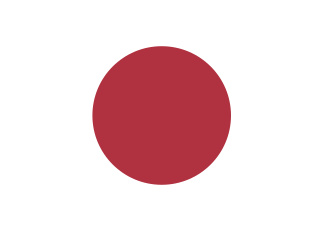
“We have today accepted the merger of Korea with Japan. From this day forward, the Korean people shall enjoy the benevolent rule of the Japanese Emperor.”
— Japanese proclamation upon annexation, August 1910
For thirty-five years, from 1910 to 1945, the Korean peninsula existed not as an independent nation but as a colony of the Japanese Empire — formally known as Chōsen. What followed was one of the most consequential and traumatic chapters in Korean history: a period defined by systematic cultural suppression, forced mobilization, organized resistance, and an enduring struggle to preserve Korean identity in the face of deliberate erasure.
Understanding this era is essential for anyone seeking to comprehend modern Korea — its national consciousness, its relationship with Japan, and the remarkable resilience that has shaped the peninsula’s people for generations.
Quick Facts: Korea Under Japanese Rule
| Fact | Detail |
|---|---|
| Official Name | Chōsen (朝鮮), the Japanese name for Korea |
| Period | 22 August 1910 – 15 August 1945 |
| Governing Body | Japanese Government-General of Korea |
| Capital | Keijō (present-day Seoul) |
| Status | Japanese colonial territory |
| End of Rule | Japan’s surrender in World War II, 15 August 1945 |
| Key Resistance Event | March 1st Movement (Samil Movement), 1919 |
How Did Japan Come to Annex Korea?
The road to annexation was not sudden. Japan had steadily extended its influence over the Korean peninsula throughout the late nineteenth century, particularly after its victory in the First Sino-Japanese War (1894–1895) and then the Russo-Japanese War (1904–1905). These military successes gave Japan a dominant position in East Asian geopolitics and removed two major rivals from the competition for influence over Korea.
In 1905, through the Eulsa Treaty — a deeply contested agreement that Korean officials argued was signed under coercion — Korea became a Japanese protectorate. Japan assumed control of Korean foreign affairs, and a Japanese Resident-General took effective charge of the country’s governance. Emperor Gojong, seeking international support for Korean sovereignty, famously sent secret envoys to the 1907 Hague Peace Conference, an act that led to his forced abdication.
By 1910, the formal annexation was complete. The Korea-Japan Annexation Treaty, signed on 22 August 1910, formally transferred sovereignty over the Korean Empire to the Japanese Empire. Many Korean historians and international scholars have questioned the legality of this treaty, noting that key signatories lacked proper authorization and that the process was carried out under military occupation.
Korea ceased to exist as an independent state. The Government-General of Korea, headquartered in Seoul — renamed Keijō — assumed total administrative authority over the peninsula.
The Machinery of Colonial Control
Japanese colonial rule in Korea was characterized by a highly centralized and militarized administration. In the early years, from 1910 to 1919, the period was marked by what historians describe as “military rule.” Korean newspapers were shut down, political organizations were banned, and a large gendarmerie force maintained order through coercive means. Land surveys conducted during this period resulted in significant redistribution of agricultural land, with many Korean farmers losing claims to land they had worked for generations.
The colonial economy was restructured to serve Japanese imperial interests. Korean rice was exported to Japan in large quantities, while Korean laborers were employed — and later conscripted — to work in Japanese industries. Infrastructure such as railways and roads was developed, though primarily to facilitate resource extraction and military movement rather than to benefit the Korean population.
Education became a central tool of assimilation policy. Colonial schools taught curricula in Japanese, promoted Japanese history and culture, and over time worked to suppress the Korean language in formal settings. Koreans were encouraged — and eventually pressured — to adopt Japanese names through a policy known as sōshi-kaimei, meaning “name change.” This systematic cultural reorientation was aimed at absorbing Korean identity into the Japanese imperial project.
“Though they may take our land, they cannot take our language, and though they silence our voices, they cannot silence our history.”
— Sentiment widely expressed among Korean independence activists during the colonial period
The March 1st Movement: A Nation Speaks
No single event defines Korean resistance to Japanese rule more powerfully than the March 1st Movement of 1919, known in Korean as the Samil Undong (삼일운동). On 1 March 1919, a declaration of Korean independence was read aloud in Seoul’s Pagoda Park, signed by thirty-three representatives from various religious and civic communities. The declaration, inspired in part by United States President Woodrow Wilson’s advocacy of national self-determination in the aftermath of World War I, called for the peaceful restoration of Korean independence.
What followed was extraordinary. Protests spread across the entire peninsula within days, drawing participation from farmers, students, religious leaders, merchants, and ordinary citizens. Estimates of total participants range into the millions. The Japanese colonial government responded with force: military and police units dispersed crowds, made mass arrests, and in several cases, carried out violent suppression of unarmed demonstrators. Villages were burned, protesters were killed, and thousands were imprisoned.
The movement did not achieve independence, but its impact was profound and lasting. It demonstrated the breadth of Korean opposition to colonial rule, inspired the formation of the Provisional Government of the Republic of Korea in Shanghai in April 1919, and ultimately prompted the Japanese administration to shift toward a slightly more accommodating policy — though repression never truly ceased. The March 1st Movement remains one of the most commemorated dates in Korean national memory, observed as a public holiday to this day.
Cultural Resistance and the Fight to Preserve Korean Identity
Alongside organized political resistance, Koreans engaged in sustained cultural resistance throughout the colonial period. Scholars, writers, and educators worked to document and preserve the Korean language at a time when its use in public life was being systematically restricted. The Society for the Study of the Korean Language, founded in 1921, undertook critical work to standardize Korean orthography and compile dictionaries, preserving the linguistic heritage of the nation under hostile conditions.
Korean literature, art, and religious life continued to express national identity. Buddhist temples, Christian churches, and Cheondogyo religious communities all played roles in nurturing a sense of Korean distinctiveness. Writers produced novels and poetry that, even when forced into coded or metaphorical language, spoke to the Korean experience under occupation.
Abroad, Korean independence activists organized tirelessly. The Provisional Government in Shanghai, led at various points by figures including Syngman Rhee and Kim Gu, lobbied international governments and maintained the institutional claim of Korean sovereignty throughout the colonial decades. Guerrilla fighters operated in Manchuria and along the Chinese-Korean border, engaging Japanese forces in asymmetric resistance.
Wartime Mobilization and Its Legacies
As Japan escalated its military ambitions across Asia in the 1930s and into the 1940s, the burden placed on the Korean population intensified dramatically. Koreans were conscripted into the Japanese military and labor force in enormous numbers. Men were sent to fight or work in mines, factories, and construction sites across the Japanese Empire — from the Korean peninsula itself to Pacific islands and the Asian mainland. Women, in a chapter of history that remains deeply painful and contested, were recruited or coerced into serving as so-called “comfort women” for the Japanese military, a systematic practice of sexual violence that continues to be a source of unresolved historical grievance between Korea and Japan.
Food, metals, and other resources were extracted from Korea to supply Japan’s war machine, deepening deprivation on the peninsula. Korean cultural expression was suppressed with renewed intensity: the Korean language was banned from schools by 1938, and public use of Korean was increasingly discouraged. The pressure on Koreans to demonstrate loyalty to the Japanese Emperor reached its peak in the final years of the war.
Comparing the Phases of Japanese Colonial Rule
| Phase | Period | Character | Key Features |
|---|---|---|---|
| Military Rule | 1910–1919 | Harsh, repressive | Military gendarmerie, land surveys, press suppression |
| Cultural Policy Era | 1919–1931 | Relatively relaxed | Some Korean-language press permitted, limited cultural expression allowed |
| Wartime Mobilization | 1931–1945 | Intensely extractive | Forced labor, military conscription, language bans, name changes enforced |
Liberation and the Weight of Memory
Japan’s surrender on 15 August 1945, marking the end of World War II, brought the colonial period to a close. For Koreans, this day — known as Gwangbokjeol, or “National Liberation Day” — is a moment of enormous historical significance, celebrated annually as a national holiday in both South and North Korea.
Liberation did not bring immediate peace or resolution. The peninsula was divided along the 38th parallel between Soviet and American occupation zones, a division that hardened into the separate states of North and South Korea and eventually led to the devastating Korean War of 1950–1953. The structural and psychological legacies of colonial rule — disrupted land ownership, suppressed institutions, a traumatized population, and unresolved historical grievances — shaped Korea’s postcolonial trajectory in profound ways.
Debates about the colonial period remain live and sometimes contentious, both within Korea and between Korea and Japan. Questions of historical acknowledgment, the experiences of comfort women, the full accounting of forced labor, and the nature of the annexation treaties themselves continue to shape diplomatic relations and public memory in East Asia.
What is beyond question is the resilience demonstrated by the Korean people across thirty-five years of colonial rule. From the scholars who secretly recorded the Korean language to the independence fighters in Manchurian forests, from the marchers of 1 March 1919 to the families who kept Korean traditions alive in their homes, Korea’s people preserved the identity, culture, and spirit that would rise again in 1945.
Continue Exploring
- On This Site: The March 1st Independence Movement — Korea’s Day of Declaration | King Gojong and the End of the Joseon Dynasty | The Korean Provisional Government in Exile
- Korea Under Japanese Rule — Wikipedia
- Encyclopedia of Korean Culture — Academy of Korean Studies
- Korea — Encyclopædia Britannica
- Japanese Colonialism in Korea — Asia Society
- The March 1st Movement — Wikipedia