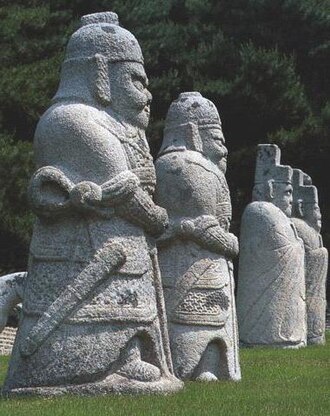
“A king who cannot control his own house cannot control his kingdom.”
Among the monarchs of the Joseon dynasty, few figures are as consequential — or as morally complex — as Taejong (태종), the third king of Joseon. Born in 1367 and dying in 1422, he reigned over one of the most transformative periods in early Korean statecraft. Where his father, Taejo Yi Seonggye, founded the dynasty, it was Taejong who gave it the bones to survive. He eliminated rivals with cold efficiency, restructured the central government, and paved the way for the golden age that would follow under his son, Sejong the Great. To understand Joseon is, in many ways, to understand Taejong.
Quick Facts: Taejong of Joseon
| Personal Name | Yi Bangwon (이방원) |
|---|---|
| Reign Title | Taejong (태종) |
| Born | 1367, Hamhung |
| Died | 1422 |
| Reigned | 1400–1418 |
| Dynasty | Joseon |
| Father | Taejo (Yi Seonggye), founder of Joseon |
| Notable Successor | Sejong the Great (his son) |
From Scholar to Kingmaker: Taejong’s Early Life
Yi Bangwon — the man who would become Taejong — was born in 1367 in Hamhung, in what is now the northern part of the Korean peninsula. He was the fifth son of Yi Seonggye, the military general whose ambitions would eventually topple the Goryeo dynasty and establish Joseon in 1392. Unlike many princes who were raised purely in martial traditions, Bangwon received a rigorous Confucian education and passed the civil service examination, known as the gwageo. This dual background — scholarly training combined with an intimate familiarity with his father’s military world — made him an unusually capable political operator.
His role in the actual founding of the Joseon dynasty was not incidental. When Taejo Yi Seonggye was still consolidating power, it was Bangwon who took decisive action against one of the most powerful opponents of the new regime: the scholar-official Jeong Mong-ju. A towering figure of Goryeo loyalty, Jeong Mong-ju refused to transfer his allegiance to the new Yi family order. In 1392, Bangwon arranged his assassination on the Seonjuk Bridge in Gaeseong. The killing was audacious and politically effective — it removed the most credible voice of opposition to the dynastic transition at a single stroke.
Why Did the Princes’ War Tear the Yi Royal Family Apart?
Despite his central role in making Joseon possible, Yi Bangwon was not rewarded with the crown succession he believed he deserved. Taejo, influenced by his second queen and her advisor Jeong Dojeon, designated a young half-brother as the crown prince. For Bangwon, who had risked everything to secure the dynasty, this was an unbearable slight — and a strategic miscalculation by his father that would have violent consequences.
In 1398, Bangwon launched what historians call the First Strife of Princes (Wangja-ui nan). He mobilized his private forces, killed the designated crown prince and several of his brothers, and forced the execution of Jeong Dojeon, the ideological architect of early Joseon governance. It was a brutal act of familial violence, but it shifted the succession decisively in Bangwon’s favour. His older brother, Prince Jeongan, was placed on the throne as the second king — but both men understood this was temporary.
A Second Strife of Princes followed in 1400, this time pitting Bangwon against another brother. Once again, Bangwon prevailed. He was installed as crown prince shortly thereafter and ascended the throne as Taejong later that same year. His father Taejo, devastated by the bloodletting within his own family, abdicated and spent his final years in grief and retirement.
“Taejong understood something that many rulers never grasped: the greatest threat to a new dynasty is not an external enemy but internal division. He removed that threat, at whatever cost.”
3 Institutional Reforms That Defined Taejong’s Reign
1. Curtailing the Power of the Aristocracy
One of Taejong’s most consequential achievements was his sustained campaign to reduce the power of the great aristocratic families — the same class that had destabilized the late Goryeo period. Under the Goryeo system, powerful clans had accumulated private armies and vast landholdings, which gave them the means to challenge central authority. Taejong systematically dismantled this structure. He abolished private armies, requiring all military forces to be registered under the state. This was not merely administrative tidying — it was a fundamental reordering of where power resided in Korean society.
2. Reforming the Central Government
Taejong reorganized the central government structure to ensure that authority flowed through the king rather than through semi-autonomous noble councils. He strengthened the role of the State Council (Uijeongbu) while also creating mechanisms to prevent any single minister from accumulating too much influence. This restructuring was partly a response to the danger he had witnessed firsthand in Jeong Dojeon’s near-total control over early Joseon policy. The lesson Taejong drew was clear: ministers served the throne, not the other way around.
3. Establishing a Registration System for the Population
Taejong implemented a household registration system that required all subjects to carry identification. This measure served multiple purposes: it made taxation more efficient, it allowed for more accurate military conscription, and it reinforced the state’s authority over the movement and identity of its people. Critics have noted the controlling nature of such a system, but administratively it represented a significant modernization of Joseon’s bureaucratic capacity.
Taejong and His Son: Setting the Stage for Sejong the Great
Perhaps the most remarkable act of Taejong’s kingship was knowing when to stop. In 1418, he abdicated in favour of his son, who would reign as Sejong the Great — widely regarded as the greatest monarch in Korean history, the creator of the Hangul writing system, and the patron of an extraordinary flowering of Korean arts and science. But Taejong did not simply hand over the throne and disappear. He retained real power behind the scenes for several years, continuing to handle military affairs and eliminating individuals he considered threats to the young king’s stability.
This included the execution of Sejong’s in-laws from the Shim clan, whom Taejong viewed as potential power brokers who could compromise his son’s independence. It was a jarring act — eliminating the family of his own daughter-in-law — but it was consistent with Taejong’s lifelong philosophy: the throne must be secured above all other considerations, including family sentiment.
How Does Taejong Compare to Other Founding-Era Joseon Kings?
| King | Reign | Key Contribution | Historical Legacy |
|---|---|---|---|
| Taejo (Yi Seonggye) | 1392–1398 | Founded Joseon dynasty; established Hanyang (Seoul) as capital | Dynasty founder, but politically outmaneuvered in later years |
| Taejong (Yi Bangwon) | 1400–1418 | Centralized power; dismantled aristocratic armies; reformed bureaucracy | Institutional architect of Joseon; ruthless but effective |
| Sejong the Great | 1418–1450 | Created Hangul; advanced science, agriculture, and the arts | Most celebrated Korean monarch; cultural golden age |
The Moral Ledger: How Should We Remember Taejong?
Taejong is not an easy king to celebrate. The blood on his hands was real — brothers killed, in-laws executed, political opponents eliminated with a thoroughness that left little to chance. He took power through coups and maintained it through fear as much as through competence. By modern standards, or even by the Confucian standards of his own time, much of what he did was indefensible.
And yet the historical record makes a compelling case that without Taejong, the Joseon dynasty might have fragmented within a generation of its founding. The aristocratic power structures he dismantled had already consumed the Goryeo dynasty from within. The private armies he abolished were the precondition for civil war. The institutional reforms he implemented gave his successors — above all, Sejong — a stable platform from which to govern and to create. Joseon would endure for over five centuries, from 1392 to 1897. That extraordinary longevity did not happen by accident, and Taejong’s uncompromising consolidation of royal authority was a foundational reason why.
Korean historians have long grappled with this tension. Taejong is frequently described as someone who did what was necessary so that better men could do what was beautiful. Whether that framing is satisfying depends on how much weight one gives to the lives destroyed along the way.
Continue Exploring
On This Site
- Sejong the Great: The King Who Gave Korea Its Voice
- How Yi Seonggye Founded the Joseon Dynasty
- Why Sejong Created Hangul — and Why It Mattered