“We hereby declare that Korea is an independent state and that Koreans are a self-governing people.”
Few moments in Korean history are as deeply felt as the decades-long struggle for independence from Japanese colonial rule. From the forced annexation of 1910 to the liberation of 1945, Koreans at home and abroad mounted a sustained, multifaceted resistance movement that drew on political organizing, armed uprising, cultural preservation, and international diplomacy. It was not a single event but a generation-long act of collective will — one that shaped the identity of the Korean nation as profoundly as any dynasty or war.
Quick Facts: The Korean Independence Movement
| Period | 1910–1945 (Japanese colonial rule); resistance began before annexation |
|---|---|
| Key Trigger | Japan–Korea Annexation Treaty, August 22, 1910 |
| Landmark Event | March First Movement (Sam-il Undong), March 1, 1919 |
| Government in Exile | Provisional Government of the Republic of Korea, established Shanghai, April 1919 |
| Key Figures | Yu Gwan-sun, Ahn Chang-ho, Kim Gu, Syngman Rhee, and many others |
| Liberation Date | August 15, 1945 (Gwangbokjeol — National Liberation Day) |
How Did Japan Come to Rule Korea?
To understand the independence movement, one must first understand how Korea lost its sovereignty. The late nineteenth century saw the Joseon dynasty caught between competing imperial powers — China, Russia, and Japan — all vying for influence on the Korean peninsula. Japan’s decisive victory in the First Sino-Japanese War (1894–1895) and the Russo-Japanese War (1904–1905) left it the dominant power in the region.
Through a series of increasingly coercive treaties, Japan steadily dismantled Korean autonomy. The Eulsa Treaty of 1905 stripped Korea of its right to conduct foreign affairs, making it a Japanese protectorate. Korean Emperor Gojong famously refused to sign and dispatched secret envoys to the Hague Peace Conference in 1907 to appeal to the international community — an act that led to his forced abdication. By August 1910, the Japan–Korea Annexation Treaty formally extinguished the Korean state. Korea became Chōsen, a colonial possession of the Japanese Empire.
Under colonial rule, Japanese authorities suppressed the Korean language in schools, forced Koreans to adopt Japanese names, extracted agricultural and industrial resources for the empire’s benefit, and imposed harsh restrictions on political assembly and press freedom. The conditions were designed not merely to govern Korea but to erase its distinct identity — and it was precisely this assault on identity that galvanized resistance.
The March First Movement: A Nation Rises
The most iconic moment of the independence movement came on March 1, 1919. On that day, thousands of Koreans gathered simultaneously across the peninsula to hear a Declaration of Independence read aloud in public. Thirty-three representatives — drawn from Christian and Cheondogyo religious communities — signed the declaration and arranged for its distribution. The protests spread rapidly, with participants marching peacefully in cities, towns, and rural villages, crying out “Manse!” (Long live Korea!).
Japanese colonial authorities responded with overwhelming force. Soldiers and police fired on unarmed crowds, imprisoned tens of thousands, and razed villages suspected of harboring organizers. Estimates of those killed during the suppression range into the thousands. Among those who became symbols of the movement was Yu Gwan-sun, a nineteen-year-old student activist who organized protests in her home region of Cheonan after her school was closed by authorities. She was arrested, tortured in Seodaemun Prison, and died in captivity in September 1920. She is commemorated today as a national martyr.
“The movement was not extinguished by repression — it was scattered into a hundred new forms, taking root in exile communities, underground networks, and the hearts of ordinary Koreans.”
The March First Movement did not achieve immediate independence, but its consequences were far-reaching. It shocked the international community, prompted a degree of reform in Japanese colonial policy (a shift toward so-called “cultural rule” rather than purely military governance), and catalyzed the formation of a formal Korean government in exile.
The Provisional Government: Korea’s Voice in Exile
Within weeks of the March First Movement, Korean independence leaders convened in Shanghai to establish the Provisional Government of the Republic of Korea (대한민국 임시정부). Founded in April 1919, it was a remarkable institution — a government without territory, operating clandestinely in a foreign city, yet claiming legitimate authority over the Korean nation.
The Provisional Government drafted a constitution, published newspapers, maintained diplomatic missions, and attempted to secure international recognition — most urgently from the United States, which many Korean leaders believed would champion the principle of national self-determination following Woodrow Wilson’s Fourteen Points. Syngman Rhee served as its first president, lobbying tirelessly in Washington. Ahn Chang-ho, one of the movement’s most principled voices, worked to build organizational capacity and moral discipline within the independence community, arguing that Korea’s liberation required not just political action but the cultivation of an educated, civic-minded citizenry.
Kim Gu, who became one of the Provisional Government’s most enduring leaders, took a more confrontational approach. Under his direction, the Korean Patriotic Corps carried out a series of dramatic acts of resistance against Japanese officials in the early 1930s. The government relocated repeatedly as Japanese pressure and the Second Sino-Japanese War disrupted its Shanghai base, eventually settling in Chongqing, China, where it remained until 1945.
3 Pillars of the Independence Movement
1. Cultural and Educational Resistance
Many independence activists understood that preserving Korean language, literature, and history was itself an act of resistance. Scholars worked to standardize and document the Korean language. Historians like Sin Chae-ho wrote passionately nationalistic histories that reframed Korea’s past as a story of indigenous greatness rather than tributary dependence. Underground schools and civic organizations kept Korean cultural identity alive even as colonial authorities tried to suppress it.
2. Armed Resistance and Guerrilla Warfare
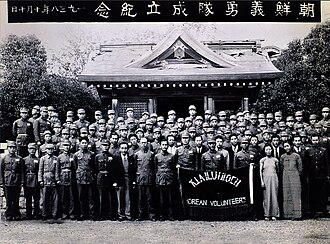
Not all resisters chose peaceful means. Throughout the colonial period, armed independence fighters — the Righteous Armies (의병, Uibyeong) — operated in the Korean countryside and across the border in Manchuria and Siberia. Korean guerrilla units fought Japanese forces in northeastern China through the 1930s and into the 1940s. The Korean Independence Army, affiliated with the Provisional Government, eventually aligned with Allied forces and trained to participate in operations on the Korean peninsula — plans that were overtaken by Japan’s sudden surrender in August 1945.
3. Diaspora Networks and International Diplomacy
The independence movement was never confined to the Korean peninsula. Large Korean communities in the United States (particularly in Hawaii and California), Manchuria, Siberia, and China served as organizational hubs, fundraising centers, and publishing bases. Independence leaders traveled the world seeking recognition and support. Though they rarely achieved the formal international backing they sought, these diaspora networks sustained the movement through its darkest years and kept Korea’s cause visible on the world stage.
Why Did the International Community Fail Korean Independence Activists?
One of the most painful chapters of the independence movement is the story of its diplomatic failures. Korean activists placed enormous hope in the 1919 Paris Peace Conference, believing that Woodrow Wilson’s principle of national self-determination — articulated as a framework for reshaping post-World War I Europe — would be applied universally. It was not. The Allied powers, Japan among them, had no interest in undermining Japanese imperial authority in East Asia. Korean petitions were ignored. The promise of self-determination, as Korean leaders bitterly noted, applied to the defeated powers’ former subjects in Europe, not to colonized peoples in Asia.
This lesson was not forgotten. It deepened suspicion of Western powers among some Korean independence thinkers, drove others toward socialism and communist internationalism as alternative frameworks, and ultimately reinforced the understanding that Korea’s liberation would depend primarily on Korean determination — and on shifts in the broader geopolitical landscape that lay beyond any individual activist’s control.
Liberation and Its Complicated Legacy
That geopolitical shift came in August 1945, when Japan’s defeat in World War II brought colonial rule to an abrupt end. August 15 — Gwangbokjeol, meaning “day of restoring light” — is celebrated as Korea’s National Liberation Day. But independence, when it came, arrived not as the triumphant culmination of the movement’s vision but as the result of Allied military victory. The peninsula was immediately divided at the 38th parallel between Soviet and American occupation zones, and the Provisional Government’s leaders found themselves returning to a homeland already being carved into two competing states.
The independence movement’s legacy is therefore both celebrated and contested. In South Korea, its heroes are honored as founders of the nation — Yu Gwan-sun’s face has appeared on currency, Kim Gu is revered as a patriotic icon, and March 1 is a national holiday. In North Korea, a different set of resistance figures — particularly those who fought as communist guerrillas in Manchuria — are elevated. Both states claim the movement as their founding narrative, reflecting how deeply the struggle for independence remains embedded in Korean national identity on both sides of the DMZ.