“A kingdom that bends without breaking endures. Goryeo faced the might of the Liao Empire three times — and three times, it prevailed.”
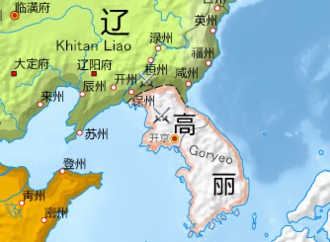
Between 993 and 1019 CE, the Korean kingdom of Goryeo faced one of the most severe military threats in its history. The Khitan people, rulers of the powerful Liao Empire to the north, launched not one but three major invasions against the peninsula. Yet against extraordinary odds, Goryeo’s soldiers, diplomats, and commanders managed to repel each assault. The story of the Goryeo–Khitan War is one of strategic brilliance, fierce resistance, and a small kingdom’s refusal to be absorbed into a continental empire.
Quick Facts: The Goryeo–Khitan War
| Detail | Information |
|---|---|
| Conflict | Goryeo–Khitan War |
| Period | 993–1019 CE |
| Belligerents | Kingdom of Goryeo vs. Liao (Khitan) Empire |
| Number of Invasions | Three major invasions |
| Key Goryeo Figures | Seo Hui (diplomat), Gang Gam-chan (general) |
| Decisive Battle | Battle of Gwiju (1019) |
| Outcome | Goryeo retained sovereignty; peace treaty established |
| Dynasty on Throne | Goryeo (918–1392) |
The World Goryeo Faced: A Dangerous Neighborhood
By the late 10th century, the Korean peninsula had been unified under the Goryeo dynasty for only a few generations. Founded in 918 CE by Wang Geon, Goryeo had absorbed the Later Three Kingdoms and established a sophisticated court culture at its capital, Gaegyeong (modern-day Kaesong). Yet the geopolitical landscape surrounding the peninsula was volatile and threatening.
To the north and northwest, the Khitan people had built the formidable Liao Empire, which stretched across much of Manchuria and northern China. The Liao had already delivered a devastating blow to the Balhae state — a kingdom with which Goryeo felt a cultural and ethnic kinship — absorbing it in 926 CE. Goryeo had even taken in Balhae refugees, a decision that did little to endear it to the Khitan rulers.
Meanwhile, Goryeo maintained diplomatic and cultural ties with the Song dynasty of China, whom the Khitan viewed as a rival. From the Liao perspective, a Goryeo aligned with Song was a potential threat on their eastern flank. This tension set the stage for decades of conflict.
The First Invasion (993): Seo Hui and the Art of Diplomacy
In 993, the Liao Empire sent a large army southward into Goryeo territory. The invasion initially seemed overwhelming, and voices within the Goryeo court urged surrender or at least the ceding of northern territories. However, the kingdom produced a diplomat of remarkable skill: Seo Hui.
Rather than capitulating, Seo Hui negotiated directly with the Khitan commander Xiao Sunning. In a remarkable exchange, Seo Hui argued that Goryeo was the legitimate successor to the ancient kingdom of Goguryeo — pointing out that even the name “Goryeo” reflected this heritage — and that the lands between Goryeo’s northern border and the Liao frontier were being occupied by the Jurchen tribes, not by Goryeo. He proposed that if the Khitan withdrew and allowed Goryeo to pacify the Jurchen tribes, Goryeo would then be able to establish formal diplomatic relations with Liao.
The argument was persuasive. The Khitan withdrew without major battle, and in exchange Goryeo agreed to cut its ties with the Song dynasty and enter into a tributary relationship with Liao. As a further consequence of this agreement, Goryeo gained the right to expand into the territory east of the Yalu River, which it proceeded to fortify. The first invasion ended not with bloodshed but with a stunning diplomatic victory for Goryeo.
“Seo Hui walked into the enemy camp with words instead of weapons — and walked out with territory.”
Why Did the Khitan Invade Again? Understanding the Second Invasion (1010)
Despite the agreements reached in 993, relations between Goryeo and Liao deteriorated rapidly in the years that followed. Goryeo constructed a line of forts in the newly acquired northern territories, strengthening its military position. More critically, the Goryeo court did not fully honor its pledge to abandon Song China as a diplomatic partner and continued to cultivate relationships across the sea.
The trigger for the second invasion came from within Goryeo itself. In 1009, a military strongman named Gang Jo staged a coup, killing King Mokjong and placing King Hyeonjong on the throne. The Liao Emperor Shengzong used this political instability as a pretext for invasion, demanding that Goryeo submit and that the king travel personally to the Liao court.
The second invasion, launched in 1010, was far more destructive than the first. A Liao army reportedly numbering in the hundreds of thousands crossed into Goryeo. King Hyeonjong was forced to flee southward, and the Khitan forces sacked and burned the Goryeo capital of Gaegyeong. It was a catastrophic moment for the kingdom.
Yet even in defeat, Goryeo demonstrated resilience. The Khitan overextended their supply lines deep into hostile territory and faced persistent Goryeo resistance. Gang Jo, the coup leader, was executed — reportedly to satisfy Liao demands — and Hyeonjong promised to visit the Liao court in person. The Khitan withdrew once more, though they had extracted a heavy political price. Hyeonjong never made the promised visit to Liao, and tensions continued to simmer.
The Third Invasion and the Battle of Gwiju (1018–1019)
Frustrated by Goryeo’s repeated failure to fulfill its diplomatic obligations, the Liao Empire mounted its third and largest invasion in the winter of 1018. The Khitan commander Xiao Baiya led an army said to number around 100,000 soldiers across the frozen northern frontier.
This time, Goryeo was ready. The kingdom had spent the years since the second invasion rebuilding its defenses and preparing for exactly this scenario. The commander entrusted with Goryeo’s defense was Gang Gam-chan, a civilian official who had risen to become one of the most celebrated military figures in Korean history. Though already in his seventies at the time of the third invasion, Gang Gam-chan proved to be a commander of exceptional talent.
Gang Gam-chan’s strategy was aggressive and inventive. As the Khitan army advanced, Goryeo forces harassed them at every opportunity. According to historical accounts, Gang Gam-chan ordered a dam built across a river and then released the water as Khitan forces crossed, causing significant casualties and disruption. Goryeo forces then launched a direct assault, inflicting heavy losses on the already-disrupted enemy column.
The climax came at the Battle of Gwiju in 1019. As the battered Khitan army attempted to retreat northward after failing to take Goryeo’s fortified cities, Gang Gam-chan’s forces intercepted them at Gwiju (modern-day Kusong in North Korea). The battle was a complete Goryeo victory. Historical sources describe the Khitan suffering catastrophic losses — with only a small fraction of the original army reportedly making it back across the border. It stands as one of the most decisive military victories in Korean history.
3 Reasons the Goryeo–Khitan War Matters to Korean History
- It secured Goryeo’s independence. After the Battle of Gwiju, the Liao Empire negotiated a peace that recognized Goryeo’s sovereignty. The kingdom was not absorbed into the Liao sphere as a subject state, but survived as an independent polity. This was far from guaranteed — the Balhae state, facing a similar threat, had been entirely destroyed.
- It shaped Korea’s northern borders. The territorial gains made during and after the first invasion — particularly the right to settle and fortify lands near the Yalu River — helped define the geographic boundaries of the Korean state in ways that still resonate today. Goryeo built a great wall stretching across the northern frontier as a lasting monument to this era of conflict.
- It produced enduring cultural heroes. Seo Hui and Gang Gam-chan became celebrated figures in Korean history, their names associated with the idea that a smaller, weaker nation can outmaneuver a great empire through cleverness, courage, and determination. Gang Gam-chan in particular is still honored in Korea today, and his story has been adapted into popular dramas and literature.
Comparing the Three Invasions
| Invasion | Year | Khitan Pretext | Key Event | Outcome for Goryeo |
|---|---|---|---|---|
| First | 993 | Goryeo’s ties to Song China; Jurchen border disputes | Seo Hui’s diplomatic negotiations | Diplomatic victory; territorial gain near Yalu River |
| Second | 1010 | Goryeo’s coup and failure to honor agreements | Sack of Gaegyeong; king flees south | Heavy losses; Khitan withdrawal after promises made |
| Third | 1018–1019 | Goryeo’s continued non-compliance | Battle of Gwiju; Gang Gam-chan’s decisive victory | Major military triumph; peace established |
The Aftermath: Peace and the Great Northern Wall
Following the disastrous third invasion, the Liao Empire had little appetite for further military adventures on the Korean peninsula. A peace settlement was reached that left Goryeo with its sovereignty intact and its territory undiminished. In many ways, the outcome was a remarkable achievement for a kingdom that had seemed, at the height of the second invasion, on the brink of subjugation.
Goryeo responded to its hard-won security with a massive construction project: a defensive wall stretching across the northern frontier, sometimes called the Cheonri Jangseong or “Thousand-Li Wall.” Constructed over several decades following the wars, it represented both a physical defense against future incursions and a statement of Goryeo’s confidence in its own territorial integrity.
The wars also had a lasting cultural impact. The burning of Gaegyeong in 1010 destroyed precious texts and artifacts, prompting the Goryeo court to undertake one of the most ambitious cultural preservation projects in East Asian history: the carving of the Tripitaka Koreana, a complete set of Buddhist scriptures onto wooden blocks. Though the original set was later destroyed by the Mongols, a subsequent version carved in the 13th century survives today at Haeinsa Temple and is now a UNESCO World Heritage treasure.
The Goryeo–Khitan War thus set in motion a chain of cultural and political developments that would define Korean civilization for centuries. It demonstrated that the peninsula’s inhabitants possessed both the military capability and the diplomatic acumen to preserve their independence in one of the most dangerous geopolitical environments in the medieval world.
Continue Exploring
On Coreaverse
- The Goryeo Dynasty: Korea’s Medieval Golden Age
- The Tripitaka Koreana: Faith Carved in Wood
- When the Mongols Came: Korea’s Second Great Test