“A kingdom that cannot defend its borders cannot long endure — yet Goryeo endured, and in enduring, it defined itself.”
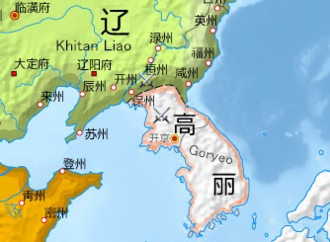
Between 993 and 1019 CE, the Korean kingdom of Goryeo faced one of the gravest threats in its history. The Khitan Liao dynasty, a powerful empire based in what is now northeastern China and Mongolia, launched three major military campaigns aimed at bringing Goryeo to heel. What followed was a prolonged struggle that tested the diplomatic skill, military resolve, and national identity of the Korean peninsula. In the end, Goryeo not only survived — it emerged with its sovereignty intact and its borders secured, a remarkable outcome against one of medieval Asia’s most formidable military powers.
The Goryeo–Khitan War remains one of the most consequential conflicts in Korean history, shaping the peninsula’s geopolitical relationships for generations. Yet outside of Korea it is little known, overshadowed by the more famous Mongol invasions that came two centuries later. This is the story of how Goryeo faced down the Liao empire — through battlefield courage, brilliant diplomacy, and remarkable feats of engineering.
Quick Facts: The Goryeo–Khitan War
| Dates | 993–1019 CE |
|---|---|
| Belligerents | Goryeo Korea vs. Khitan Liao Dynasty |
| Number of Invasions | Three major campaigns |
| Key Goryeo Figures | Seo Hui (diplomat), Gang Gam-chan (general) |
| Decisive Battle | Battle of Gwiju (1019) |
| Outcome | Goryeo victory; Khitan invasions repelled |
| Goryeo Capital | Gaegyeong (modern Kaesong) |
| Era | Early Goryeo period |
Why Did the Khitan Invade Goryeo?
To understand the Goryeo–Khitan War, one must first understand the geopolitical landscape of tenth- and eleventh-century East Asia. The Khitan people had established the Liao dynasty in 916 CE, carving out a powerful empire that stretched across the steppes of Inner Asia and into northern China. By the late tenth century, Liao was one of the dominant powers of the region, and it viewed the Korean peninsula with strategic interest.
Goryeo, founded in 918 CE by Wang Geon, had unified the Korean peninsula by 936 CE, bringing the Later Three Kingdoms period to a close. In the decades that followed, Goryeo developed a sophisticated bureaucratic state modeled in part on Tang China, and it maintained close cultural and diplomatic ties with the Song dynasty of China. This relationship was precisely what alarmed the Khitan. The Liao empire was in frequent conflict with Song China, and Goryeo’s alliance with Song was seen as a potential threat to Liao’s eastern flank.
The Khitan also had territorial ambitions along the Yalu River region, where Jurchen tribes lived in the borderlands between Liao and Goryeo. Control of these territories would strengthen Liao’s position and weaken Goryeo’s northern defenses. When the Khitan finally moved in 993 CE, they did so with overwhelming force — but they encountered a Goryeo that was far more resourceful than they had anticipated.
The First Invasion: A Diplomat Wins the Day (993 CE)
The first Khitan invasion of 993 CE is remarkable not for its battles, but for its diplomacy. A Liao army of considerable size crossed into Goryeo’s northern territories, and the Goryeo court was thrown into crisis. Some ministers counseled surrender; others proposed ceding the northern territories to buy peace. King Seongjong of Goryeo faced an extraordinarily difficult decision.
It was at this moment that Seo Hui, one of Goryeo’s most gifted diplomats and officials, stepped forward. Rather than accepting defeat or flight, Seo Hui requested permission to negotiate directly with the Khitan commander, Xiao Sunning. What followed was one of the most celebrated diplomatic exchanges in Korean history.
Seo Hui argued before Xiao Sunning that Goryeo was in fact the legitimate successor to the ancient Korean kingdom of Goguryeo — a claim embedded in the very name “Goryeo” — and that the territories north of the Cheongcheon River that the Khitan coveted were historically Korean lands. More practically, he argued that Goryeo’s close relationship with Song China was not a military threat to Liao, but simply a matter of cultural and commercial exchange. If Liao allowed Goryeo to occupy the lands between the two kingdoms currently held by the Jurchen tribes, Goryeo would sever its formal ties with Song and enter into a tributary relationship with Liao instead.
Astonishingly, Xiao Sunning accepted these terms. The Khitan army withdrew without a major battle. As a result of Seo Hui’s negotiation, Goryeo actually gained territory — the six garrison towns region (Gangdong-6-ju) along the Yalu River — in exchange for a nominal acknowledgment of Liao suzerainty. It was a stunning diplomatic triumph.
“Seo Hui walked into the Khitan camp and walked out with territory. It remains one of the most extraordinary feats of diplomacy in Korean history.”
The Second Invasion: Goryeo Under Fire (1010–1011 CE)
The peace that followed the first invasion was uneasy. Goryeo had agreed to end its formal relationship with Song and to send tribute to Liao, but in practice the Korean court was reluctant to fully commit to Liao’s orbit. The construction of fortifications along the northern frontier, and Goryeo’s continued cultural connections with Song China, created friction.
The trigger for the second invasion came from political turmoil within Goryeo itself. In 1009 CE, a military strongman named Gang Jo staged a coup, assassinating King Mokjong and placing King Hyeonjong on the throne. The Liao emperor used this internal upheaval as a pretext for invasion, demanding that Goryeo hand over Gang Jo and submit more completely to Liao authority.
In 1010 CE, the Liao emperor Shengzong personally led a massive invasion force into Goryeo. The scale of the assault was far greater than the first invasion. Khitan forces swept through the northern defenses and advanced deep into Goryeo territory. The capital Gaegyeong was sacked and burned. King Hyeonjong was forced to flee southward. Gang Jo, who had led the resistance, was captured and executed by the Khitan.
Yet even in this desperate situation, Goryeo did not collapse. King Hyeonjong sent envoys to negotiate, and the Liao emperor, perhaps wary of overextending his supply lines and facing continued Korean resistance, agreed to withdraw — on condition that Hyeonjong come in person to the Liao court to pay homage. Hyeonjong agreed in principle, though in practice he never made the journey. The Khitan army withdrew, and Goryeo began the painful work of reconstruction.
3 Reasons Why Goryeo Survived the Khitan Onslaught
1. Diplomatic Flexibility
From Seo Hui’s brilliant negotiations in 993 to King Hyeonjong’s strategic promises during the second invasion, Goryeo’s leaders consistently used diplomacy to buy time and extract concessions. They understood that survival did not always require military victory — sometimes it required giving the enemy a reason to leave.
2. Fortified Defense Networks
Following the first invasion, Goryeo invested heavily in northern fortifications. The Cheolli Jangseong, a great wall system stretching hundreds of kilometers across the northern frontier, was constructed over several decades as a direct response to the Khitan threat. These fortifications, combined with garrison towns, made subsequent invasions far more costly for the attacker.
3. Military Leadership at Gwiju
The third and final invasion was met by one of Korea’s greatest military commanders. Gang Gam-chan’s decisive victory at the Battle of Gwiju in 1019 CE effectively ended the Khitan threat once and for all, demonstrating that when diplomacy failed, Goryeo possessed the military capacity to defeat the Liao army in the field.
The Third Invasion and the Battle of Gwiju (1018–1019 CE)
The Khitan launched their third and largest invasion in 1018 CE, frustrated by Goryeo’s failure to fulfill its promise of royal submission and its continued construction of border fortifications. A Liao army reportedly numbering in the hundreds of thousands crossed into Goryeo under the command of Xiao Baiya.
This time, Goryeo was better prepared. The general Gang Gam-chan had devised a bold strategy. As the Khitan army advanced southward, Gang Gam-chan reportedly used a series of defensive engagements and strategic retreats to draw the invaders deep into Korean territory, stretching their supply lines and exhausting their forces. He famously used a flooding tactic — damming a river and releasing the waters onto the advancing Khitan cavalry — to disrupt the enemy’s formations early in the campaign.
The decisive moment came in 1019 CE at the Battle of Gwiju, near modern-day Kusong in North Korea. As the weakened and depleted Khitan army attempted to retreat northward after failing to achieve its objectives, Gang Gam-chan’s forces fell upon them with devastating effect. The battle was a catastrophic defeat for the Liao army. Historical sources record that of the vast Khitan force that had invaded, only a small fraction returned home. It was one of the most complete military victories in Korean history.
The battle broke the Khitan will to invade Goryeo. Within a few years, the two sides concluded a peace settlement on terms broadly favorable to Goryeo. The kingdom retained its territories, maintained its sovereignty, and was never again seriously threatened by the Liao dynasty.
Legacy: What the War Meant for Korea
The Goryeo–Khitan War left a profound mark on Korean history and national consciousness. The victory over the Khitan invasions — particularly the stunning triumph at Gwiju — became a source of enduring national pride. Gang Gam-chan was celebrated as a hero for generations, remembered in Korean literature and folklore alongside figures such as Admiral Yi Sun-sin.
The war also had lasting practical consequences. The Cheolli Jangseong wall system, built in the aftermath of the first two invasions, shaped the northern frontier of Korea for centuries. The experience of resisting foreign invasion strengthened the institutional capacity of the Goryeo state, accelerating the development of its military and administrative systems.
Diplomatically, the resolution of the war established Goryeo’s position in the East Asian international order. While nominally acknowledging Liao suzerainty, Goryeo retained genuine independence and continued to develop its own culture, legal systems, and institutions. The kingdom that had faced down the Khitan would go on to produce extraordinary achievements in art, ceramics, Buddhism, and governance — the famous Goryeo celadon ceramics and the first complete woodblock printing of the Buddhist Tripitaka among them.
In a broader sense, the Goryeo–Khitan War reminds us that the survival of small states against larger powers often depends not on military force alone, but on the combination of strategic thinking, diplomatic skill, and the willingness to fight when fighting is unavoidable. Goryeo possessed all three, and it is why Korea exists as a distinct civilization today.
Continue Exploring
On coreaverse.com
- The Goryeo Dynasty: Korea’s Golden Age
- Gang Gam-chan: The General Who Saved Goryeo
- When the Mongols Came: Korea’s Long Resistance
- The Cheolli Jangseong: Goryeo’s Great Wall