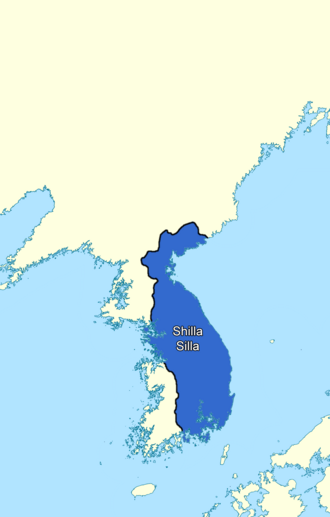
“From a small tribal league in the southeastern corner of the peninsula, Silla grew into a civilization that would reshape the entire Korean world.”
Few kingdoms in East Asian history achieved what the ancient Korean state of Silla managed over nearly a thousand years. Founded in the southeastern corner of the Korean peninsula, Silla began as one of many competing tribal confederacies during the era of the Three Kingdoms and ultimately emerged as the force that unified Korea under a single rule for the first time. Its story is one of patient diplomacy, fierce military alliance, and a flowering of Buddhist culture that left monuments still standing today.
Quick Facts: The Kingdom of Silla
| Detail | Information |
|---|---|
| Founded | 57 BC (traditional date) |
| Dissolved | 935 AD |
| Capital | Geumseong (modern Gyeongju) |
| Ruling Clan | Park, Seok, and Kim clans |
| Religion | Shamanism, later Buddhism (official from 528 AD) |
| Key Alliance | Tang Dynasty China |
| Unified Korea | 668 AD |
| Era | Ancient / Three Kingdoms period |
Origins: How Did Silla Rise from a Small City-State?
According to traditional Korean records, Silla was established in 57 BC in the Gyeongju basin, a fertile plain tucked between mountains in the southeastern corner of what is now South Korea. It began as one of the twelve chiefdoms that made up the Jinhan confederacy, a loose alliance of communities sharing language, custom, and territory. The legendary founder, Bak Hyeokgeose, is said to have been born from an egg and chosen by the heads of six village clans to be their ruler — a founding myth that reflects Silla’s origins as a community forged from multiple tribal groups rather than a single dominant lineage.
In its earliest centuries, Silla was the weakest of the Three Kingdoms that would come to define the peninsula. To the north and west, Goguryeo controlled vast territories stretching from the Manchurian plains down into the central Korean peninsula. Baekje, a sophisticated and culturally refined kingdom, dominated the southwest. Silla, by contrast, was hemmed in and slower to adopt the trappings of centralized statehood — a formal bureaucracy, a written legal code, Chinese-style governance — than its rivals. Yet this slower development had an unexpected benefit: Silla retained the loyalty of its aristocratic clans through the bone rank system, a rigid hierarchy that defined one’s social role and political rights by birth. Far from being a weakness, this system gave Silla’s elite a powerful shared identity that bound them to the kingdom’s survival.
Buddhism, Culture, and the Hwarang
One of the most transformative moments in Silla’s history came in 528 AD, when Buddhism was officially adopted as the state religion under King Beopheung. The path to acceptance was not easy. Buddhist monk Ichadon famously accepted martyrdom for the faith, and legend holds that when he was executed, white milk rather than blood flowed from his neck — a miracle that convinced the court to embrace the new religion. Whether or not the miracle occurred, the adoption of Buddhism reshaped Silla’s identity profoundly. Great temples were built in and around the capital, and the religion provided a unifying ideology that helped weld together a diverse population under royal authority.
“Buddhism did not merely arrive in Silla — it transformed the kingdom from within, giving its rulers divine legitimacy and its people a shared spiritual universe.”
Alongside Buddhism, Silla developed one of its most distinctive institutions: the Hwarang, or “Flower Knights.” These were groups of elite young men, drawn from the aristocracy, who trained together in the arts of war, music, poetry, and Confucian ethics. The Hwarang were not merely soldiers — they were the embodiment of Silla’s cultural ideals, and many of the kingdom’s greatest generals and statesmen came from their ranks. The Hwarang ethos of loyalty, courage, and cultivation became a touchstone of Korean warrior culture that echoed down through the centuries.
Three Reasons Silla Succeeded Where Others Failed
1. Strategic Alliance with Tang China
Where Goguryeo and Baekje frequently clashed with China’s Tang Dynasty, Silla’s rulers made the calculated decision to seek Tang China as an ally rather than a rival. Beginning in the 7th century, Silla’s diplomats cultivated close ties with the Tang court. This alliance proved decisive: Tang military power, combined with Silla’s armies, allowed the coalition to crush Baekje in 660 AD and Goguryeo in 668 AD. The price of this partnership was significant — Tang China initially claimed suzerainty over the conquered territories — but Silla successfully pushed Tang forces back north of the Taedong River by 676 AD, securing control over the peninsula south of that line.
2. Institutional Resilience
The bone rank system, while socially rigid, gave Silla a stable and deeply loyal aristocratic class. The kingdom’s central institutions — the Hwabaek council of nobles, the royal secretariat — were robust enough to survive periods of royal weakness. When succession crises threatened the throne, Silla’s administrative structures continued to function, preventing the kind of catastrophic collapse that could have ended the kingdom early.
3. Cultural Synthesis
Rather than simply importing Chinese models wholesale, Silla adapted and synthesized. Buddhist art and architecture flourished in uniquely Korean forms. The kingdom’s scholars produced original contributions to Buddhist thought — most notably the monk Wonhyo, whose writings on Buddhist philosophy were studied across East Asia. This capacity to absorb outside influences while maintaining a distinct identity gave Silla cultural coherence and staying power.
Unified Silla: A Golden Age of Art and Learning
The period following unification in 668 AD is known as Unified Silla, and it represents a genuine golden age for Korean civilization. The capital, Geumseong — today’s city of Gyeongju — became one of the great cities of East Asia, with a population estimated in the hundreds of thousands. Foreign merchants, Buddhist monks, and diplomats from across the Tang world and beyond walked its streets. The city was laid out in a grid pattern influenced by Chinese urban planning, and its temples, tombs, and pavilions made it a showpiece of Korean royal culture.
Among the enduring monuments of this era is Bulguksa Temple and the nearby Seokguram Grotto, both located in the mountains outside Gyeongju. Seokguram, built in the 8th century, houses a magnificent granite Buddha figure regarded as one of the masterpieces of East Asian Buddhist sculpture. The precision of its construction — the rotunda was engineered to control humidity and light through carefully placed stones — reflects the extraordinary technical and artistic skill of Unified Silla’s craftsmen. Both Bulguksa and Seokguram are today UNESCO World Heritage Sites, a recognition of their outstanding universal value.
The kingdom also invested heavily in scholarship. The National Confucian Academy was established to train government officials, and Korean monks continued to travel to Tang China and even to India in search of Buddhist texts and teachings. The monk Hyecho left a remarkable travelogue of his journey to India and Central Asia in the early 8th century, one of the earliest Korean travel narratives to survive.
Decline and Fall: Why Did Silla Collapse?
After nearly three centuries of relative stability, Unified Silla began to fracture in the late 8th and 9th centuries. The bone rank system, which had once been a source of strength, became increasingly a source of tension. The True Bone aristocracy — the second tier below the royals — grew resentful of the throne’s monopoly on power and wealth. Between 780 and 935 AD, Silla experienced no fewer than twenty succession crises, with aristocratic factions competing violently for control of the throne. Regional strongmen, known as hojok, carved out independent power bases across the countryside, and the central government’s ability to collect taxes and project authority steadily eroded.
By the early 10th century, the peninsula had effectively fragmented again. Two rival states emerged — Later Baekje in the southwest and Later Goguryeo (later renamed Taebong and then Goryeo) in the north and center — in what historians call the Later Three Kingdoms period. Silla, reduced to controlling little more than the area around Gyeongju, could not compete. In 935 AD, the last Silla king, Gyeongsun, peacefully surrendered the kingdom to Wang Geon, the founder of the Goryeo dynasty. It was a quiet end to nearly a thousand years of history.
Silla’s Legacy in Korean History
The legacy of Silla is woven deeply into the fabric of Korean culture. Its unification of the peninsula — imperfect as it was, leaving Goguryeo’s northern territories outside Korean control — established the concept of a single Korean state that would persist through Goryeo, Joseon, and into the modern era. The Buddhist artistic tradition that Silla nurtured produced monuments that remain among Korea’s most treasured cultural heritage sites. Gyeongju itself is often called “the museum without walls,” its landscape still dotted with royal tumuli, temple ruins, and stone pagodas.
The Hwarang tradition fed into later Korean martial and ethical ideals, and scholars continue to debate its influence on the tenets associated with modern martial arts. Silla’s monks and scholars contributed to a broader East Asian Buddhist intellectual tradition that stretched from Korea to Japan and across Central Asia. And the kingdom’s long history of diplomatic pragmatism — allying with powerful neighbors when necessary, asserting independence when possible — set a template that Korean rulers would return to again and again across the centuries.
Continue Exploring
- On This Site: The Three Kingdoms of Korea: Goguryeo, Baekje, and Silla Explained
- On This Site: Gyeongju Historic Areas: Walking Through Silla’s Capital
- On This Site: How Goryeo United Korea After the Fall of Silla
- Silla — Wikipedia
- Encyclopedia of Korean Culture — Academy of Korean Studies
- Gyeongju Historic Areas — UNESCO World Heritage Centre
- Silla — Encyclopædia Britannica
- Visit Korea — Gyeongju Travel Guide