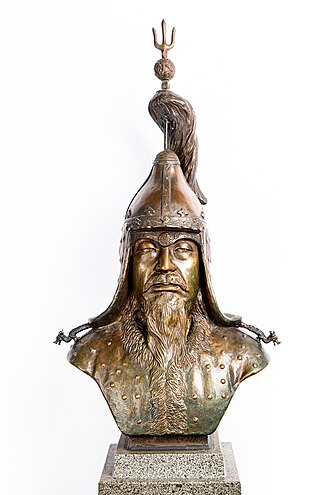
“My death must not be made known. Beat the war drums. Do not weep. Do not announce my death.” — Yi Sun-sin’s final recorded words at the Battle of Noryang, 1598
Few figures in Korean history command the reverence that Yi Sun-sin inspires. A naval commander of extraordinary brilliance, unwavering loyalty, and personal courage, Yi Sun-sin defended the Joseon dynasty against one of the most devastating invasions in East Asian history. His story is one of triumph against impossible odds, of a man who never lost a single naval battle, and who ultimately gave his life for the country he served.
To understand Yi Sun-sin is to understand a defining chapter in Korean identity — a moment when the peninsula faced near-total conquest and was saved, in large part, by the strategic genius of one admiral commanding a vastly outnumbered fleet.
Quick Facts: Yi Sun-sin at a Glance
| Detail | Information |
|---|---|
| Born | April 28, 1545, Seoul (Hanseong), Joseon Korea |
| Died | December 16, 1598, Battle of Noryang |
| Title | Admiral; posthumously elevated to Chungmugong (Duke of Loyalty and Valor) |
| Era | Joseon Dynasty (Late 16th century) |
| Major Conflict | Imjin War (Japanese invasions of Korea, 1592–1598) |
| Naval Record | Never defeated in battle |
| Famous Innovation | Associated with the use and development of the turtle ship (geobukseon) |
| Legacy | National hero; statue stands in Gwanghwamun Square, Seoul |
Early Life and the Long Road to Command
Yi Sun-sin was born on April 28, 1545, in Hanseong — present-day Seoul — during the reign of the Joseon dynasty. His family belonged to the Deoksu Yi clan, a lineage with a tradition of scholarship and civil service. Yet Yi Sun-sin chose a different path: the military.
His road to command was neither swift nor smooth. He began his military studies relatively late compared to many of his peers, and his first attempt at the military examination ended in failure when he fell from his horse and injured his leg. Undeterred, he passed the military state examination in 1576 at the age of 31 — an achievement that marked the official beginning of his military career.
Even after passing the examination, Yi Sun-sin’s advancement was repeatedly hindered by political enemies and bureaucratic obstacles. He was known for his integrity and his refusal to compromise his principles to please powerful superiors — a quality that won him deep respect among common soldiers but made him enemies among the ruling elite. He was demoted and even imprisoned more than once on charges that many historians regard as politically motivated.
Nevertheless, in 1591, just one year before the Japanese invasions began, Yi Sun-sin was appointed Left Naval Commander of Jeolla Province — a position that would place him at the very center of Korea’s most desperate hour.
Why Did Japan Invade Korea in 1592?
The invasion that would define Yi Sun-sin’s legacy began in the spring of 1592. Japan’s ruler, Toyotomi Hideyoshi, had unified the Japanese islands after decades of civil war and set his ambitions on conquering China — with Korea serving as the intended land bridge for his armies. When Joseon Korea refused to grant safe passage, Hideyoshi launched a massive amphibious invasion.
Japanese forces crossed the Korea Strait in overwhelming numbers. The Joseon army, poorly prepared and strategically fragile, was rapidly overrun. Within weeks, the Japanese captured the capital Hanseong and pushed deep into the Korean peninsula. The king, Seonjo, fled northward. Korea seemed on the verge of complete collapse.
It was at sea, however, that the invasion’s momentum would be broken — and Yi Sun-sin was the man who broke it.
“Yi Sun-sin was a man born once in a thousand years.” — Admiral Tōgō Heihachirō, the celebrated Japanese naval commander, in praise of his historical adversary’s predecessor
The Naval Campaigns: A Record Without Defeat
From the very first engagement of the war, Yi Sun-sin demonstrated a tactical brilliance that confounded Japanese commanders. The Japanese strategy depended on the navy supplying and reinforcing land forces — a supply chain that Yi Sun-sin systematically dismantled.
His first major victory came at the Battle of Okpo in May 1592, where his fleet destroyed dozens of Japanese warships with minimal losses. This was followed in quick succession by victories at Sacheon, Dangpo, and Hansan Island. The Battle of Hansan Island in July 1592 is considered his masterpiece — Yi Sun-sin employed the “crane wing” formation to encircle and annihilate a large Japanese fleet, sinking or capturing scores of vessels. The battle has been compared by military historians to the ancient Battle of Salamis in its strategic significance.
Throughout these campaigns, Yi Sun-sin never lost a single engagement. His victories denied Japan control of the western sea lanes and cut off supply routes that were critical to sustaining the Japanese land advance. Historians credit his naval campaign as a decisive factor in forcing Japan to negotiate and eventually withdraw at the end of the first phase of the invasion in 1593.
The Turtle Ship: Icon of Korean Naval Power
No discussion of Yi Sun-sin is complete without mention of the geobukseon — the turtle ship. Widely celebrated as one of the world’s first ironclad warships, the turtle ship featured a covered deck that protected oarsmen and soldiers from enemy arrows and fire, with iron spikes on the roof to prevent boarding. Its bow was shaped like a dragon’s head, capable of firing cannons and emitting smoke to confuse enemies.
Yi Sun-sin is credited with overseeing the construction and deployment of the turtle ship, refining earlier designs to create a vessel suited to aggressive close-quarters naval combat. While debate continues among historians about the precise extent of iron plating used, there is no doubt that the turtle ship proved devastatingly effective against Japanese warships in multiple engagements during the Imjin War.
Betrayal, Imprisonment, and Return
Yi Sun-sin’s integrity made him a target. In 1597, court politics and the machinations of rivals led to his dramatic downfall. Accused of insubordination and failing to obey a royal command to attack — an order he believed was a trap based on false intelligence — he was stripped of his rank, arrested, and subjected to torture. He was eventually spared execution and demoted to the rank of common foot soldier.
The consequences of his removal from naval command were catastrophic. His replacement, Won Gyun, led the Joseon fleet to near-total destruction at the Battle of Chilchonryang in July 1597 — the only major Korean naval defeat of the entire war. Of hundreds of ships, only twelve survived.
Yi Sun-sin was immediately reinstated. Facing a rebuilt and emboldened Japanese fleet, he issued one of history’s most stirring declarations: “I still have twelve ships.” With those twelve vessels, he faced a Japanese fleet of over 130 warships at the Battle of Myeongnyang in October 1597. Using the narrow Myeongnyang Strait to neutralize the Japanese numerical advantage and exploiting powerful tidal currents, he destroyed dozens of enemy ships and suffered no losses of his own. It remains one of the most remarkable naval victories in recorded history.
“I still have twelve ships. If I go into battle, the enemy shall not be contemptuous of us.” — Yi Sun-sin, before the Battle of Myeongnyang, 1597
3 Reasons Yi Sun-sin’s Legacy Endures
- An Undefeated Record: Yi Sun-sin fought and won every naval engagement he commanded. In an era of brutal warfare, his tactical record stands as one of the most remarkable in world military history, earning admiration from naval scholars across the globe.
- He Saved Korea at Its Darkest Hour: The Imjin War brought Joseon to the brink of annihilation. Yi Sun-sin’s naval campaigns prevented Japanese forces from consolidating control over the peninsula and preserved the conditions for eventual Korean recovery. His role is inseparable from Korea’s survival as a distinct nation and culture.
- A Model of Moral Integrity: Throughout his career, Yi Sun-sin refused to compromise his principles, even when doing so cost him rank, freedom, and safety. His personal diary, the Nanjung Ilgi (War Diary), reveals a man deeply aware of the suffering of his people and driven by a profound sense of duty. This moral dimension elevates him beyond a mere military figure into a symbol of national character.
Death at the Moment of Victory
By late 1598, Toyotomi Hideyoshi had died in Japan, and Japanese forces were ordered to withdraw from Korea. Yi Sun-sin moved to intercept the retreating fleet at the Battle of Noryang in December 1598. The battle was a decisive Korean and Ming Chinese victory — but during the fighting, Yi Sun-sin was struck by a bullet. Knowing he was mortally wounded, he reportedly instructed those around him to conceal his death so that his sailors would not lose heart. He died as the battle was being won.
He was 53 years old.
His body was returned to Korea and he was posthumously granted the title Chungmugong — Duke of Loyalty and Valor — a title that has become synonymous with his name. He is buried in Asan, South Chungcheong Province.
Yi Sun-sin vs. Other Great Admirals: A Brief Comparison
| Admiral | Era | Nation | Notable Achievement | Battle Record |
|---|---|---|---|---|
| Yi Sun-sin | 16th century | Korea (Joseon) | Saved Korea from Japanese conquest; Battle of Myeongnyang | Never defeated |
| Horatio Nelson | 18th–19th century | Britain | Battle of Trafalgar; dominance of Napoleonic seas | Nearly undefeated; died at Trafalgar |
| Tōgō Heihachirō | 19th–20th century | Japan | Battle of Tsushima; destruction of Russian fleet | Largely undefeated |
The comparison is notable: Tōgō Heihachirō himself reportedly expressed deep admiration for Yi Sun-sin, suggesting that while he might compare himself to Nelson, he could not compare himself to Yi Sun-sin — a remarkable tribute from a naval commander of one nation to a historical adversary of another.
Yi Sun-sin in Korean Memory and Culture
Yi Sun-sin’s presence in Korean culture is omnipresent. His statue dominates Gwanghwamun Square in the heart of Seoul, facing south — toward the sea he defended. His image appears on the 100-won coin. His war diary, the Nanjung Ilgi, is designated a UNESCO Memory of the World document. Schools, naval vessels, and public institutions bear his name across South Korea.
He has been the subject of numerous films, television dramas, and novels, each generation rediscovering in his story the qualities they wish to celebrate: courage, integrity, sacrifice, and brilliance under pressure. During periods of national crisis or challenge, Koreans have repeatedly returned to Yi Sun-sin as a touchstone of what it means to serve one’s country without thought of personal reward.
For international visitors to Korea, his presence can be felt most immediately at Hyeonchungsa Shrine in Asan — a national heritage site dedicated to his memory — and through the replica turtle ships displayed at various maritime museums along the southern coast.
Continue Exploring
- On Coreaverse: The Imjin War: Japan’s Invasions of Korea Explained
- On Coreaverse: The Turtle Ship: Engineering Marvel of Joseon Korea
- Wikipedia: Yi Sun-sin — Full Biography
- Britannica: Yi Sun-sin — Encyclopaedia Britannica
- Academy of Korean Studies: Encyclopedia of Korean Culture — Imjin War
- Asia Society: Japanese Invasions of Korea — Asia Society
- UNESCO World Heritage: Korean Heritage Sites — UNESCO