A practical guide to Korea’s largest traditional village: train and bus directions from Seoul, what to see inside, how to choose a hanok guesthouse, where to eat, and why the founding dynasty of Joseon traced its roots to this city.
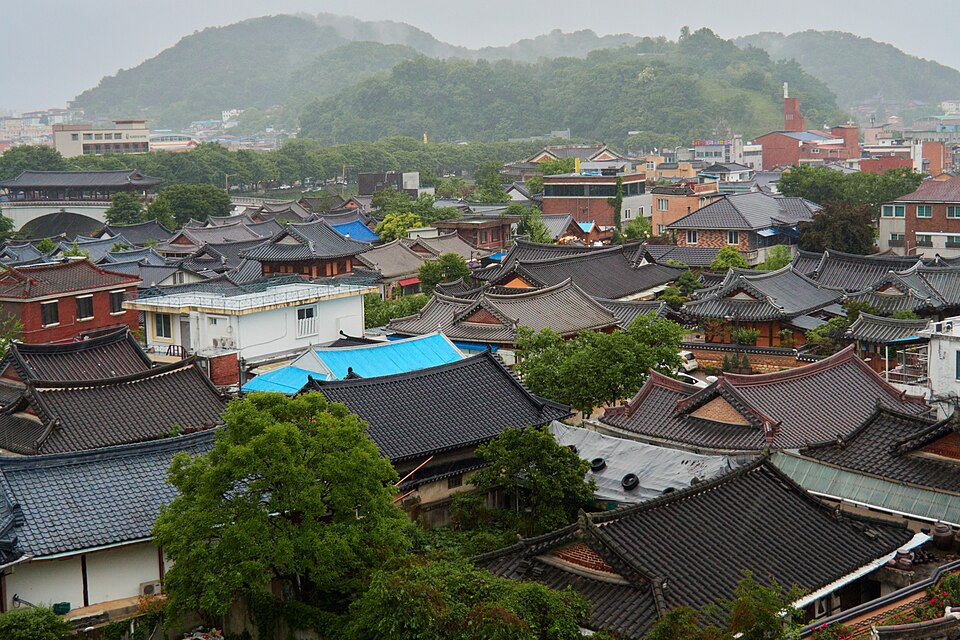
Jeonju sits in the rice plains of the southwest, three hours from Seoul, and for most of Korean history it was known for two things: the finest food in the country and the family that founded the Joseon dynasty. Today it is known for a third. On the eastern edge of the old city, some seven hundred hanok houses with curved tile roofs cluster along narrow lanes, the largest concentration of traditional architecture in Korea and the most visited.
The village is not a museum; people live and work in it, and it has become a place where Koreans go to eat, to rent hanbok, and to spend a night sleeping on a heated floor under wooden beams. This guide covers how to get there, the sights worth your time among the crowds, how hanok stays work, the food that made Jeonju famous, and the royal history behind the shrine at the village’s heart.
Why Jeonju Hanok Village Matters
Most of Korea’s hanok neighborhoods were lost to twentieth-century redevelopment. Jeonju’s survived partly by accident: when the city’s Japanese-run commercial district expanded in the 1930s, Korean residents responded by building a new quarter of traditional houses beside the old south gate, and that quarter, expanded and restored over the past two decades, is the village visitors walk today. It preserves an entire urban fabric of hanok, not isolated buildings, with the lanes, walls, courtyards, and gardens that give the architecture its meaning.
It is also the place where Korea’s culinary and craft traditions are most concentrated. Jeonju is a UNESCO City of Gastronomy, the home of bibimbap and of the makgeolli table, and the historic center of hanji paper-making, fan-making, and traditional liquor. Add the shrine that houses the portrait of King Taejo, founder of Joseon, and the village becomes a compact introduction to the dynasty’s roots, its architecture, and its everyday pleasures in one walkable square kilometer.
Quick Facts
| Location | Wansan-gu, Jeonju, Jeollabuk-do (about 3 hours south of Seoul by train or bus) |
|---|---|
| Hours | Village streets open at all times; Gyeonggijeon Shrine roughly 09:00–18:00 (to 19:00 in summer, 17:00 in winter); shops and cafés mostly 10:00–21:00 |
| Admission | Village free; Gyeonggijeon adults 3,000 KRW (Royal Portrait Museum included); other museums small separate fees |
| Hanok Stays | Dozens of guesthouses, roughly 60,000–200,000 KRW per night depending on house and season |
| Best Time | April–May and October–November; weekdays for smaller crowds; the Jeonju International Film Festival in late April–May brings extra energy and full guesthouses |
| Website | https://hanok.jeonju.go.kr |
Historical Background
Jeonju was the seat of the Jeonju Yi clan, the family of Yi Seong-gye, the general who overthrew Goryeo in 1392 and founded the Joseon dynasty as King Taejo. Although the new capital was established far to the north at Hanyang, today’s Seoul, the dynasty never forgot its ancestral home. In 1410 King Taejong ordered a shrine built in Jeonju to house a portrait of his father, and that shrine, Gyeonggijeon, still stands at the center of the village. The portrait it holds is the only surviving official image of Taejo, showing him in a blue royal robe, and it is one of Korea’s national treasures. A legend says that on his way home from a victory against pirates in 1380, Yi Seong-gye held a banquet on the hill of Omokdae above the site and, in a poem, hinted at his future ambitions; the pavilion there commemorates the story.
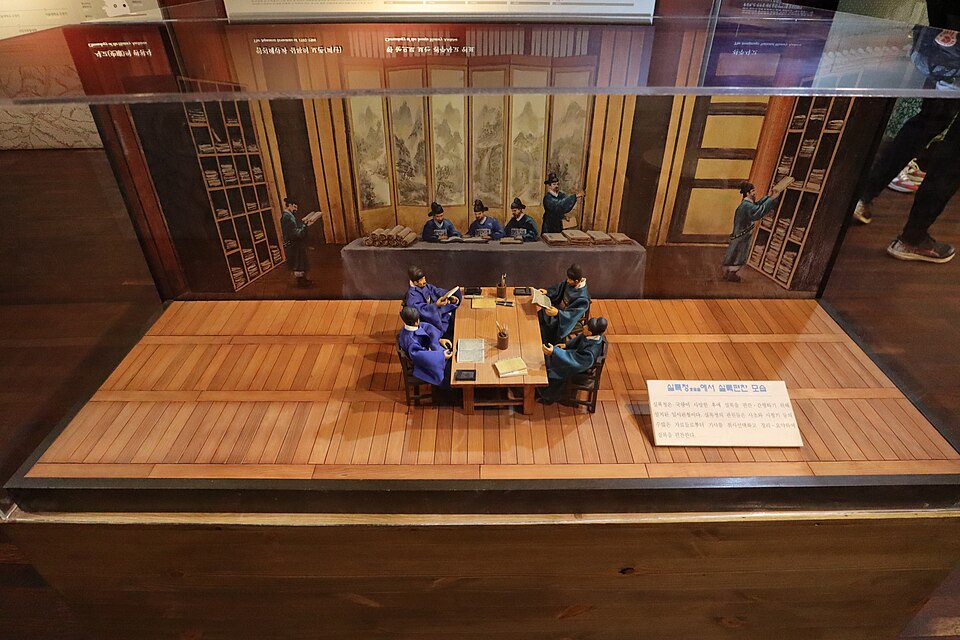
Jeonju’s prominence continued through the dynasty as the administrative capital of the Jeolla region and its richest agricultural district. The city walls and four gates were built in the seventeenth and eighteenth centuries; Pungnammun, the south gate rebuilt in 1768, is the one that survives. The Jeonju sago, one of the four repositories of the royal annals, stood in the grounds of Gyeonggijeon and was the only copy to survive the 1590s intact, an achievement credited to local scholars who carried the volumes to safety in the mountains. A reconstruction of the repository stands in the shrine grounds today.
The hanok village itself is largely a twentieth-century creation, but its houses follow the Joseon pattern exactly: the sarangchae outer quarters for men and guests, the anchae inner quarters for women and family, a kitchen with fireboxes feeding the ondol flues, and a courtyard around which everything turns. Coreaverse’s article on hanok architecture explains the principles; the village shows them in hundreds of variations.
How to Visit
Getting There from Seoul
KTX trains leave Seoul’s Yongsan Station for Jeonju several times a day and take about one hour forty minutes; slower ITX and Mugunghwa trains take two and a half to three hours at lower fares. From Jeonju Station, city buses run to the hanok village in fifteen to twenty minutes, or a taxi takes about ten. Express buses from Seoul Central City Terminal reach Jeonju Express Bus Terminal in roughly two hours forty-five minutes, with the village a fifteen-minute taxi ride away. Jeonju is also an easy add-on from Gwangju or Daejeon by bus.
Admission & Hours
The village itself has no gate and no ticket. Gyeonggijeon Shrine charges a modest admission that includes the Royal Portrait Museum in its grounds and is open daily from morning until early evening, later in summer. The Jeonju Hanok Village has several small museums with separate fees, among them the Traditional Wine Museum, the Hanji Museum, and the Fan Culture Center, most of them inexpensive and some free. Shops, cafés, and street-food stalls run from mid-morning until around nine in the evening, with the streets busiest from noon to late afternoon on weekends.
Staying in a Hanok
Sleeping in the village is the best way to see it, because the lanes empty after the day-trippers leave and are at their most beautiful in the early morning. Hanok guesthouses range from family-run houses with a couple of rooms off a courtyard to restored gentry residences with private gardens. Rooms are traditional: a heated ondol floor with folded bedding, paper doors, and often a shared bathroom in older houses, with modern bathrooms in the newer conversions. Breakfast is frequently included and simple. Expect to pay from around 60,000 KRW for a basic room to 200,000 KRW or more for a premium house, with weekends and autumn commanding the highest rates. Book several weeks ahead for those periods; the official village site lists licensed guesthouses, and major booking platforms carry most of them.
Official Village Information & Hanok Stays -> Book a Jeonju Day Tour or Hanbok Rental ->
What to See
Gyeonggijeon Shrine. Enter through the red gate on Taejo-ro into a walled compound of courtyards, halls, and a bamboo grove. The main hall holds a copy of Taejo’s portrait; the original is displayed in the Royal Portrait Museum at the rear, alongside portraits of later kings and the palanquins used to carry them. The reconstructed annals repository stands in the eastern garden. Allow an hour.
Jeondong Catholic Cathedral. Directly across the street, the Romanesque brick cathedral completed in 1914 is one of the most beautiful churches in Korea and a reminder that the village has always been a meeting point of old and new. It is free to enter outside services.
Pungnammun Gate. A short walk west, the surviving south gate of the city walls, with its two-storey pavilion, stands at the edge of Nambu Market.
Omokdae and Imokdae. Climb the wooded hill at the village’s eastern edge to the pavilion where Yi Seong-gye is said to have celebrated his victory. The view over the sea of tiled roofs is the best in Jeonju, and a footbridge leads on to Imokdae and the hillside Jaman Mural Village, whose lanes are painted with murals.
Hyanggyo Confucian School. At the southern end of the village, the Jeonju Hyanggyo is a Joseon county school with a courtyard of four-hundred-year-old ginkgo trees, spectacular in November and often used as a drama location.
The craft museums. The Traditional Wine Museum explains and pours the region’s liquors, the Hanji Museum shows how mulberry paper is made, and the Fan Culture Center displays the folding fans Jeonju once supplied to the royal court. Several offer short hands-on sessions.
What to Eat
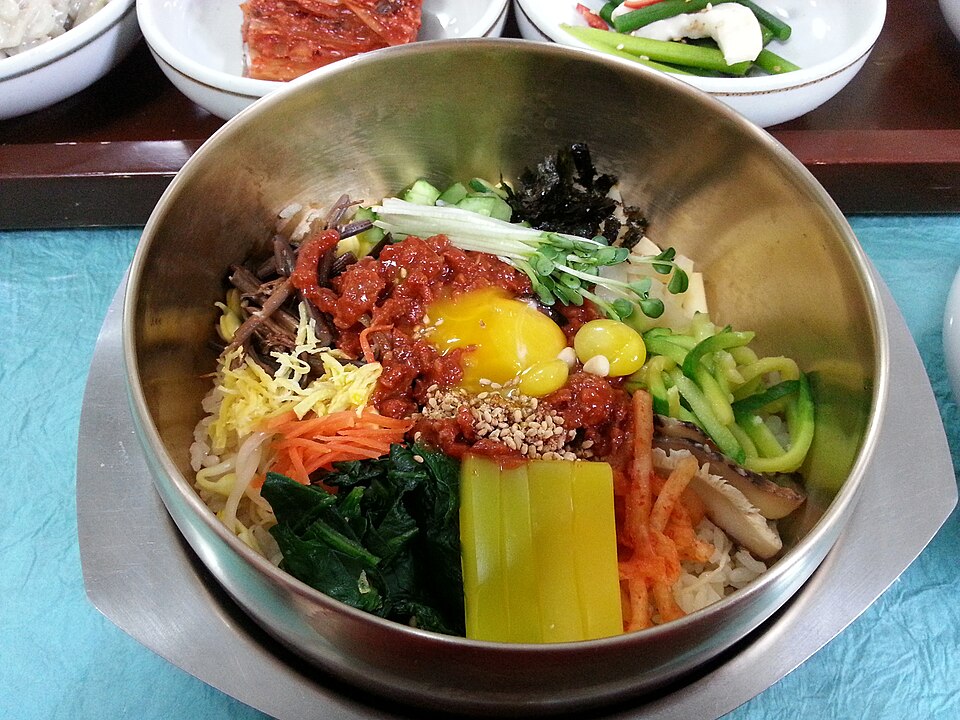
Food is half the reason to come. Jeonju bibimbap, served in a brass bowl with a dozen or more vegetables arranged by color over rice cooked in beef broth, topped with beef tartare or a raw egg yolk and eaten with the local red pepper paste, is the standard against which all other bibimbap is measured; the old restaurants near Gyeonggijeon and in the city center serve it with a full spread of side dishes. Kongnamul gukbap, a clear bean-sprout soup with rice, is the city’s breakfast and hangover cure, and the restaurants around Nambu Market serve it from dawn. Makgeolli in Jeonju is a ritual rather than a drink: in the makgeolli alleys of Samcheon-dong and other districts, ordering a kettle of the milky rice wine brings a table crowded with side dishes at no extra charge, and each further kettle brings more. In the village streets, the snacks to try are the grilled skewers, the choco-pie from the famous local bakery, and the kimchi croquettes and cheese-stuffed treats that change with every season.
Korean Traditional Food: A Cultural Feast ->
Recommended Itinerary
This two-day plan assumes an overnight stay in a hanok; day-trippers should take the first day only and catch an evening train.
- Day 1, 11:00 – Arrive and settle. Drop bags at your hanok, rent hanbok if you wish, and have an early bibimbap lunch before the crowds.
- 13:00 – Gyeonggijeon and the cathedral. The shrine, the portrait museum, and Jeondong Cathedral across the road.
- 15:00 – Craft museums and lanes. The Hanji Museum or Traditional Wine Museum, then wander the side streets toward the Hyanggyo and its ginkgo trees.
- 17:30 – Omokdae at sunset. Climb for the view over the roofs, cross to the mural village, and descend as the lanterns come on.
- 19:30 – Makgeolli. Taxi to a makgeolli alley for a kettle and its cascade of side dishes, or, on Friday or Saturday, the night market at Nambu Market.
- Day 2, 08:00 – Morning walk and gukbap. The village at dawn, then bean-sprout soup near Nambu Market and Pungnammun Gate.
- 10:00 – Wider Jeonju. The Jeonju National Museum, the Deokjin Park lotus pond in summer, or a hanji-making workshop, before the train home.
Nearby Places & Experiences
Nambu Market, just outside Pungnammun Gate, is a traditional market by day and, on Friday and Saturday nights, a lively night market of food stalls and young vendors. Deokjin Park in the north of the city has one of Korea’s largest lotus ponds, in bloom in July and August. The Jeonju National Museum covers the history of the Jeolla region. Beyond the city, Naejangsan National Park, an hour south, is the country’s most celebrated autumn foliage destination, and Maisan, the twin “horse-ear” peaks with a temple of stacked stone pagodas, is an hour east. Hanbok rental, hanji craft classes, and traditional liquor tastings can all be booked in the village.
Practical Tips
The village is compact and flat, apart from the climb to Omokdae, so it is easy on foot; hanbok rental shops cluster on the main streets and near the cathedral. Weekends are crowded from late morning; come early or stay overnight. Many hanok guesthouses have thin walls and early check-out, so pack accordingly and treat the courtyard as shared space. Cash is useful at market stalls, though cards are accepted almost everywhere else. Tourist information centers at the main entrances hand out English maps.
Frequently Asked Questions
How do I get to Jeonju from Seoul?
KTX from Yongsan Station in about one hour forty minutes, then a fifteen-to-twenty-minute bus or ten-minute taxi from Jeonju Station; or an express bus from Central City Terminal in about two hours forty-five minutes.
Is the village free to enter?
Yes. Only individual sites such as Gyeonggijeon and the museums charge small admissions.
Can I stay overnight in a hanok?
Yes. Dozens of guesthouses offer ondol rooms around courtyards; book ahead for weekends and autumn.
What food is Jeonju famous for?
Bibimbap above all, plus kongnamul gukbap bean-sprout soup, the makgeolli table, and the village’s street snacks.
How many days do you need?
One full day for the main sights and food; two days with a hanok night for the museums, a makgeolli alley, and the quieter corners.
Continue Exploring
Hanok Architecture and Traditional Homes -> Joseon Dynasty Explained -> Korean Traditional Food ->
- 07-jeonju-hanok-rooftops.jpg — lumoplank / CC0 / Wikimedia Commons source
- 07-jeonju-gyeonggijeon.jpg — Mobius6 / CC BY-SA 4.0 / Wikimedia Commons source
- 07-jeonju-bibimbap.jpg — Douglas Paul Perkins / CC BY 3.0 / Wikimedia Commons source
Disclosure: This article may contain affiliate links. Booking through them supports Coreaverse at no extra cost to you.