A practical guide to Seoul’s most beautiful royal palace: how the Secret Garden tour works, when English sessions run, how to get Moonlight Tour tickets, and why Joseon kings preferred this palace to the grander one down the road.
Most visitors to Seoul walk straight to Gyeongbokgung, the great formal palace at the head of Gwanghwamun Square. The kings of Joseon, for the most part, did not. For roughly 270 years they lived and governed a fifteen-minute walk to the east, in a palace whose buildings step down a wooded slope instead of marching along a straight line, and whose rear garden, kept hidden from all but the royal family, is now considered the finest surviving example of Korean landscape design.
Changdeokgung is the only one of Seoul’s five royal palaces on the UNESCO World Heritage List, and it is the one that rewards a little planning. The palace grounds can be visited freely, but the Secret Garden, which occupies more than half the site, is open only on timed guided tours with limited places. This guide explains how the tickets work, when to go, what to see, and the history that makes it all worth the effort.
Why Changdeokgung Matters
Every other royal palace in Seoul was laid out as a statement of order: a central axis, symmetrical courtyards, the throne hall in a commanding position. Changdeokgung breaks the rule. Built in 1405 as a secondary palace at the foot of a ridge of Bugaksan, it follows the contours of the land, so that gates open at angles, courtyards sit at different levels, and the buildings feel placed in the landscape rather than imposed on it. This is the quality UNESCO recognized in 1997, describing the complex as an exceptional example of architecture integrated with its natural setting.
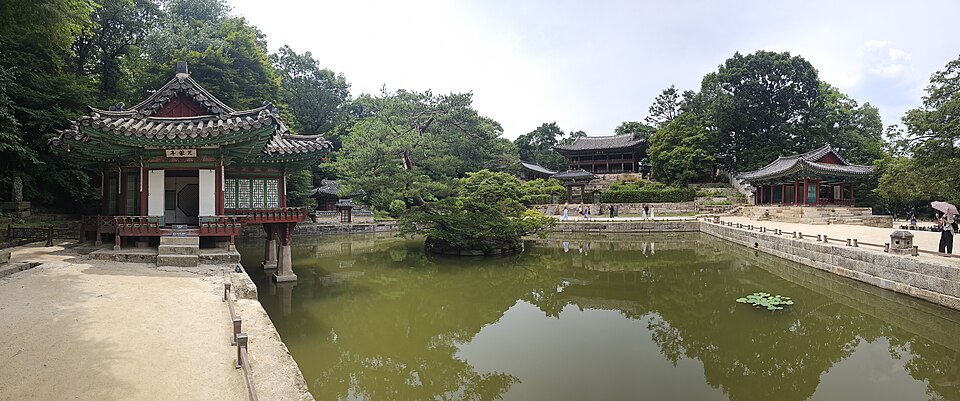
Behind the residential quarters lies the Huwon, the “rear garden,” known to foreigners for a century as the Secret Garden. Across some 32 hectares of hillside, the Joseon kings created a sequence of ponds, pavilions, and study halls that appear almost accidental: a lotus pond with a two-storey library above it, a pavilion shaped like a fan, a scholar’s cottage built without a single trace of paint. It was here that kings read, fished, wrote poetry, held archery contests, and, occasionally, farmed a small rice paddy to understand the labor of their subjects. For visitors, the garden tour is the closest thing Korea offers to stepping inside the private life of a Confucian monarch.
Quick Facts
| Location | 99 Yulgok-ro, Jongno-gu, Seoul (5 minutes from Anguk Station, Line 3) |
|---|---|
| Hours | Opens 09:00; closes 17:30 (Nov–Jan), 18:00 (Feb–May, Sep–Oct), or 18:30 (Jun–Aug); last entry one hour before closing |
| Closed | Mondays |
| Admission | Palace: adults 3,000 KRW. Secret Garden tour: additional 5,000 KRW. Free palace entry for hanbok wearers, children, and seniors |
| Secret Garden Tours | Guided only, about 90 minutes; English sessions a few times daily, Korean sessions hourly; limited places, online booking recommended |
| Best Time | Late October to early November for autumn foliage in the garden; late April to May for fresh greenery |
| Website | https://royal.khs.go.kr/cdg |
Historical Background
Changdeokgung was commissioned by King Taejong, the third ruler of Joseon, and completed in 1405 as a secondary residence to the main palace of Gyeongbokgung. Taejong had come to the throne after a violent succession struggle among the sons of the founder, and there is a long-standing view that he preferred not to live in the palace where those events had unfolded. Whatever his reasons, the new palace was built on a different principle from the first: instead of a rigid north-south axis, its architects let the buildings follow the hillside, and the main gate, Donhwamun, opens toward the southwest rather than due south.
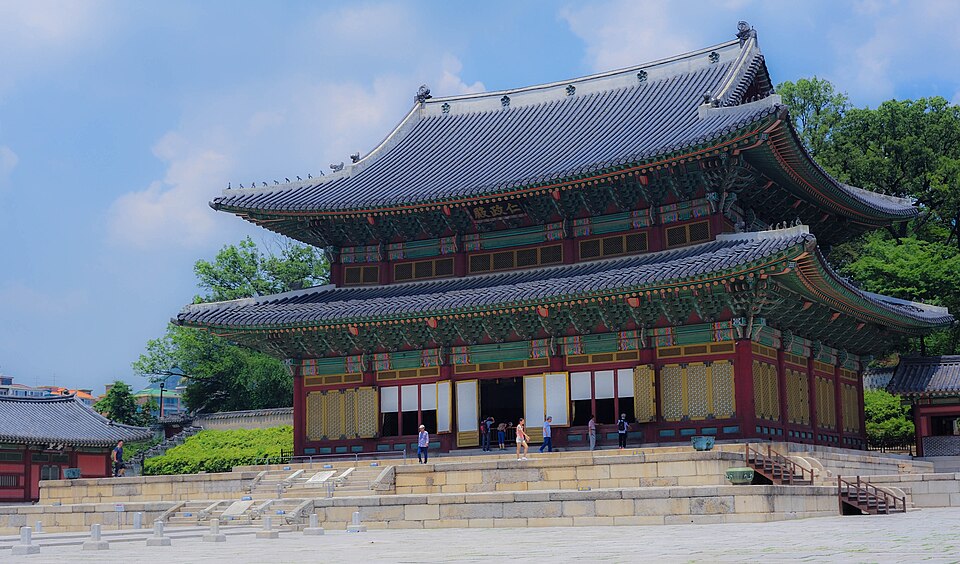
The palace’s real prominence came after 1592, when all of Seoul’s palaces were destroyed by fire. Changdeokgung was the first to be rebuilt, in 1610, and because Gyeongbokgung was left in ruins for the next two and a half centuries, it became the principal seat of the Joseon court. Thirteen kings governed from here. The Secret Garden expanded with each generation: King Injo added the Ongnyucheon stream complex in the 1630s, and King Jeongjo, the reforming monarch of the late eighteenth century, built the Juhamnu library above Buyongji pond in 1776 to house the royal archive and the scholars he gathered around him.
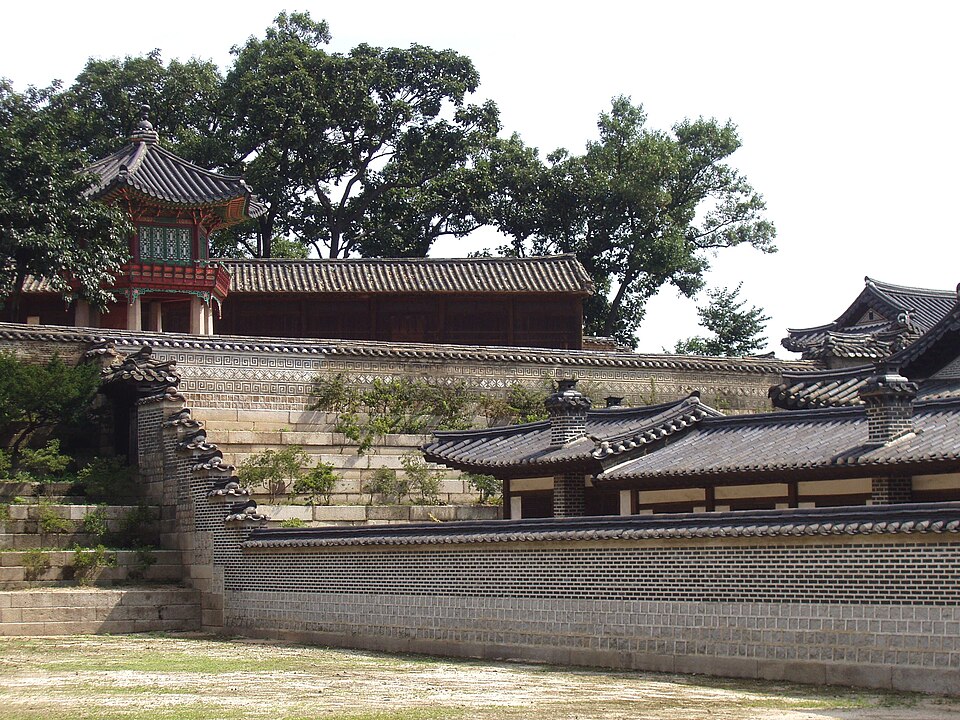
In the nineteenth century, the royal family added Nakseonjae, a deliberately modest, unpainted compound in the scholarly style, which remained a residence for members of the former royal family well into the twentieth century. That continuity of use, combined with the survival of original structures such as Donhwamun Gate and the throne hall Injeongjeon, is why Changdeokgung preserves the atmosphere of a lived-in royal household better than any other palace in Korea.
How to Visit
Getting There
Changdeokgung is one of the easiest palaces to reach. Take Subway Line 3 to Anguk Station and leave by Exit 3; the main gate, Donhwamun, is a five-minute walk east along Yulgok-ro. From Jongno 3-ga Station (Lines 1, 3, and 5), it is about a ten-minute walk north. If you are coming from Gyeongbokgung, the walk east through Bukchon Hanok Village takes fifteen to twenty minutes and is one of the most pleasant routes in the city.
Admission & Hours
The ticket office is beside Donhwamun Gate. Palace admission for adults is 3,000 KRW and covers the palace buildings, which you may explore freely. The Secret Garden requires a separate 5,000 KRW ticket tied to a specific tour time. The combination ticket for Seoul’s four main palaces and Jongmyo Shrine, 10,000 KRW and valid for three months, includes the Secret Garden tour and is the best value if you plan to see more than one site. The palace opens at 09:00 and closes between 17:30 and 18:30 depending on the season; it is closed on Mondays.
How the Secret Garden Tour Works
This is the part that catches visitors out. The garden cannot be entered on your own. Tours depart from a gate at the back of the palace at set times, in Korean roughly every hour and in English a few times a day, typically late morning and early-to-mid afternoon, with Japanese and Chinese sessions also scheduled. Each session is limited to a small group, and about half of the places are sold online in advance through the official reservation site, with the remainder sold at the ticket office on the day on a first-come basis. In autumn and on weekends, both allocations are gone early, so the safest plan is to book online as soon as your dates are fixed and arrive at the palace at least an hour before your tour time to see the main buildings first.
The tour takes about ninety minutes and covers roughly two kilometers on paths that climb and descend through the woods. Wear proper shoes. The guide explains the history of each pavilion, and the pace is unhurried, but there is little opportunity to linger, so keep your camera ready. Free-roaming access to the garden is offered only on rare special occasions announced by the palace.
The Moonlight Tour
In spring and again in autumn the palace runs the Changdeokgung Moonlight Tour, one of the most sought-after cultural events in Seoul. Small groups carrying traditional lanterns are led after dark through Injeongjeon, past Nakseonjae, and into the Secret Garden, where a traditional music performance is staged beside Buyongji pond. The program lasts about two hours and includes tea and refreshments. Tickets are sold online in advance and typically sell out within minutes of release, with a separate allocation reserved for foreign visitors. If you want to attend, check the official site for the sale date well before your trip.
What to See: Palace Buildings
Donhwamun Gate. The main gate, rebuilt in 1608, is the oldest surviving palace gate in Seoul and the only one with two storeys. Notice that the path beyond it turns right rather than continuing straight, the first sign that this palace follows the land.
Geumcheongyo Bridge. Built in 1411, this stone bridge over the palace stream is the oldest in Seoul still in place. Look for the carved animals guarding its arches.
Injeongjeon Throne Hall. The palace’s ceremonial center, where kings were enthroned and foreign envoys received. The courtyard is lined with rank stones, and the interior shows late nineteenth-century additions such as glass windows and electric lighting, a reminder that this hall was in use into the modern era.
Seonjeongjeon. The small council hall beside the throne hall is the only palace building in Seoul with a blue-glazed tile roof, a color reserved for the most important structures.
Huijeongdang and Daejojeon. The king’s and queen’s residences were rebuilt in the 1920s using materials moved from Gyeongbokgung. Their interiors mix traditional layouts with Western furniture, carpets, and chandeliers.
Nakseonjae. At the eastern end of the palace, this tranquil compound of unpainted wooden buildings and terraced flower gardens was built in 1847 in the style of a scholar’s house. It is often the quietest corner of the palace and the best place to sit for a moment.
What to See: The Secret Garden
The tour follows a set route, and the guide will explain each stop, but knowing what is coming helps you make the most of it.
Buyongji and Juhamnu. The first and most famous stop: a square lotus pond with a round island at its center, symbolizing the Confucian cosmos of square earth and round heaven. On the south bank stands Buyongjeong, a pavilion with two legs in the water; on the north slope rises Juhamnu, the two-storey royal library built by King Jeongjo in 1776. The scene is the single most photographed view in the garden, and in autumn the maples around the pond turn scarlet.
Aeryeonji and Uiduhap. A second pond with a smaller pavilion, beside a study hall built by the crown prince who would become King Heonjong. Uiduhap was left entirely unpainted as an expression of scholarly humility.
Yeongyeongdang. A compound of buildings built in the style of a nobleman’s house rather than a palace, where the king could receive guests informally. It is the best surviving example in Seoul of upper-class residential architecture of the Joseon period.
Ongnyucheon. Deep in the garden, a stream channeled through a curved groove in a rock, where King Injo held poetry-drinking contests in the 1630s: a cup was floated down the stream and the guest had to compose a verse before it reached him. Several small pavilions cluster around the rock, including one thatched with rice straw.
Recommended Itinerary
The palace and garden together need about three hours. The following half-day plan assumes an early-afternoon English Secret Garden tour, which is the most common booking for overseas visitors.
- 10:00 – Bukchon Hanok Village. Start at Anguk Station and spend an hour walking the hanok lanes of Bukchon, ending at the viewpoints above Gahoe-dong.
- 11:30 – Lunch near Anguk. The alleys between Anguk Station and the palace have a dense cluster of Korean restaurants and cafés; Samcheong-dong is a few minutes north.
- 12:30 – Changdeokgung palace buildings. Enter through Donhwamun and walk the throne hall, council hall, residences, and Nakseonjae before your tour time.
- 14:00 – Secret Garden tour. Meet at the garden gate ten minutes before departure.
- 16:00 – Changgyeonggung. Exit through the connecting gate into the neighboring palace of Changgyeonggung for a quieter finish, or walk south to Insadong for tea and crafts.
If your visit falls on a Monday, when Changdeokgung is closed, swap the day with Gyeongbokgung, which closes on Tuesdays instead.
Nearby Places & Experiences
Changgyeonggung Palace adjoins Changdeokgung to the east and can be entered directly through a connecting gate with a separate ticket. Its greenhouse, built in 1909, is the oldest Western-style glasshouse in Korea. Jongmyo Shrine, the royal ancestral shrine of the Joseon kings and a UNESCO site in its own right, lies just to the south and is famous for the austere grandeur of its main hall and the ritual music performed there each May. Bukchon Hanok Village, between Changdeokgung and Gyeongbokgung, is the best place in the city to see traditional houses still lived in, and Insadong, a ten-minute walk south, is the traditional-crafts street for tea houses, ceramics, brushes, and hanji paper. Several operators offer half-day walking tours that combine Changdeokgung with Bukchon and Insadong, and some include the Secret Garden tour ticket, which removes the booking headache.
Practical Tips
Wear walking shoes for the garden’s slopes, and bring water in summer. Hanbok earns free palace admission but not a free Secret Garden ticket, and long skirts can be awkward on the garden paths. Photography is permitted throughout, though tripods are not, and the guide will keep the group moving. Restrooms are near the ticket office and at a couple of points inside the palace; there are none on the garden route. The palace café by the gate is a convenient place to wait for a tour.
Frequently Asked Questions
Do I need to book the Secret Garden tour in advance?
Yes. The garden is visited only on guided tours with limited places. Roughly half of each session’s tickets are sold online in advance and the rest at the ticket office on the day. English tours run a few times daily and sell out in peak season, so book online once your dates are fixed.
How much does Changdeokgung cost?
Adult palace admission is 3,000 KRW, and the Secret Garden tour is an additional 5,000 KRW. The 10,000 KRW combination ticket for Seoul’s four main palaces and Jongmyo Shrine includes the Secret Garden.
What day is Changdeokgung closed?
Mondays. This differs from Gyeongbokgung, which closes on Tuesdays, so the two can be combined on most days.
How long does the Secret Garden tour take?
About ninety minutes, covering roughly two kilometers with some uphill walking. Allow another hour for the palace buildings.
What is the Moonlight Tour?
A ticketed evening program in spring and autumn in which small groups walk the lantern-lit palace and garden with a guide and live traditional music. Tickets are released online in advance and sell out very quickly.
Continue Exploring
Changdeokgung: Secret Gardens of Joseon -> Gyeongbokgung: Heart of the Joseon Dynasty -> Joseon Dynasty Explained ->
- 02-changdeokgung-buyongji.jpg — Sadopaul / CC BY-SA 4.0 / Wikimedia Commons source
- 02-changdeokgung-injeongjeon.jpg — Smin630 / CC BY-SA 4.0 / Wikimedia Commons source
- 02-changdeokgung-nakseonjae.jpg — Daderot / CC BY-SA 3.0 / Wikimedia Commons source
Disclosure: This article may contain affiliate links. Booking through them supports Coreaverse at no extra cost to you.